A row of identical hangers can make a closet look orderly while still leaving shoulder bumps in knitwear and trousers sliding onto the floor. A typical wardrobe contains items with different weights, widths, and care needs. One hanger shape rarely handles all of them equally well.
Before buying a large pack, count what actually hangs in your closet. Separate shirts, tailored jackets, coats, trousers, skirts, and pieces better folded according to their care needs. Then choose a modest mix. Existing hangers that support garments properly can remain in use even if the colors do not form a perfect row.
Use a small mix of hangers suited to your garments; matching every piece is less useful than a closet that closes.
Fit the hanger to the garment width
Lay a shirt flat and compare the shoulder span with the hanger. A hanger that extends too far can push into the sleeve, while a very narrow one may leave the shoulder unsupported. Children's clothing and smaller adult sizes may need a different width from broad jackets. Look for actual measurements on the product page.
Check hanger depth inside the closet as well. A wide coat or bulky sleeve may brush the closed door, especially in a shallow wardrobe. Measure from the rail to the door and back wall, including the garment. Replacing every hanger with a thick wooden version can reduce usable space if the closet is already crowded.
Assign a type to each clothing group
A slim hanger can be useful for lightweight shirts when its shape supports them properly. A broader structured hanger may suit tailored jackets better. Trouser bars and clips offer different ways to hold folded garments; check whether the surface or pressure leaves marks on your particular fabric before using a whole set.
| Garment group | Hanger feature to compare | Watch for |
|---|---|---|
| Everyday woven shirts | Appropriate width and smooth shoulders | Ends extending into sleeves |
| Jackets and heavier coats | More substantial shaped support | Crowding and rail capacity |
| Trousers | Suitable bar or adjustable clips | Creases, slipping, or pressure marks |
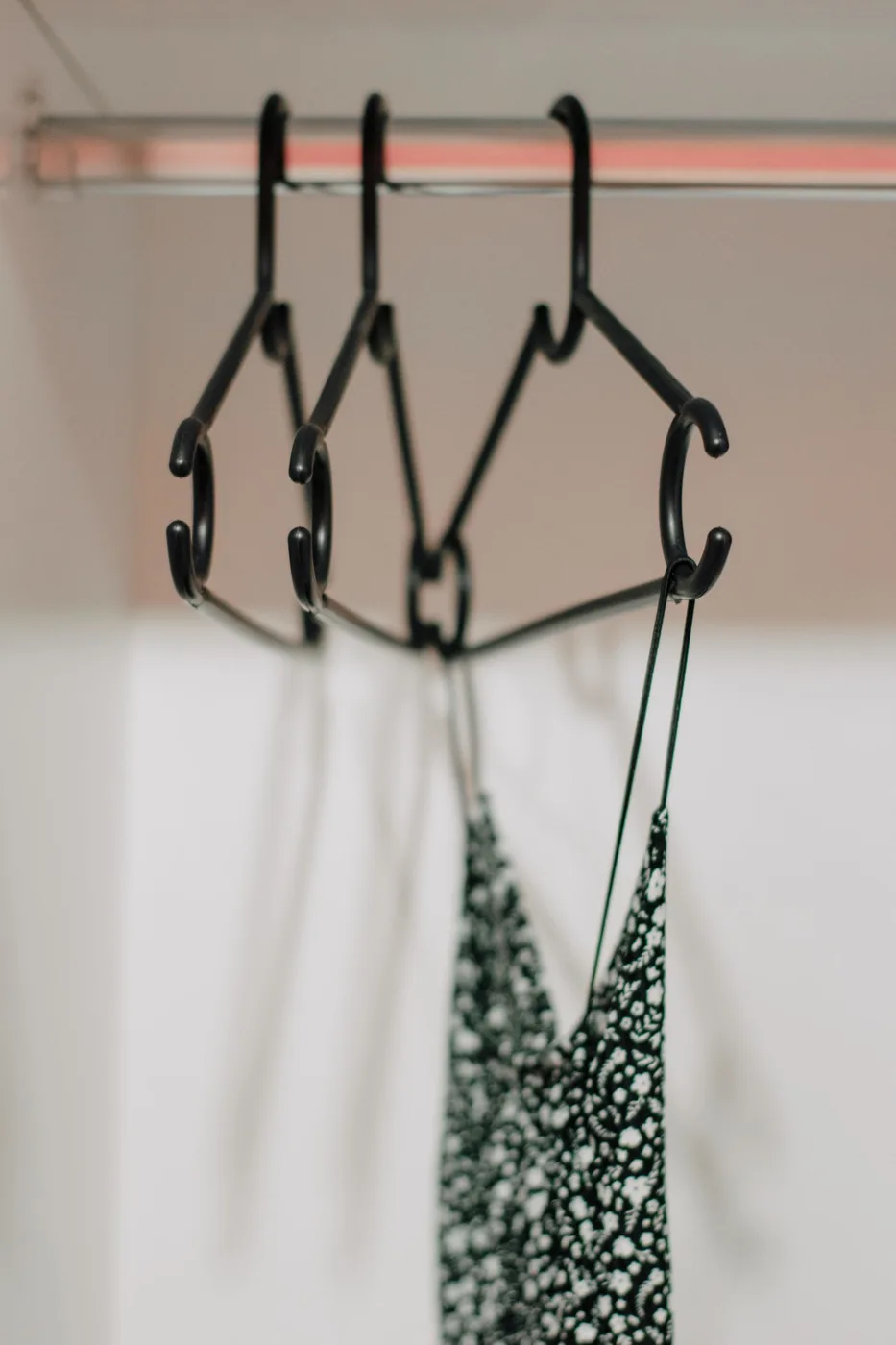
| Strappy pieces | Useful notches or appropriate loops | Sharp edges catching fabric |
| Heavy or delicate knitwear | Care-appropriate folded storage | Stretching from unsupported hanging |
Treat knitwear and wet clothing separately
Do not hang an item simply because a hanger maker shows a sweater in a photograph. Consider the garment's instructions, weight, and construction. Folding is often a practical option when the shape is vulnerable to stretching. A hanger accessory can change support, but it does not override the garment maker's care advice.
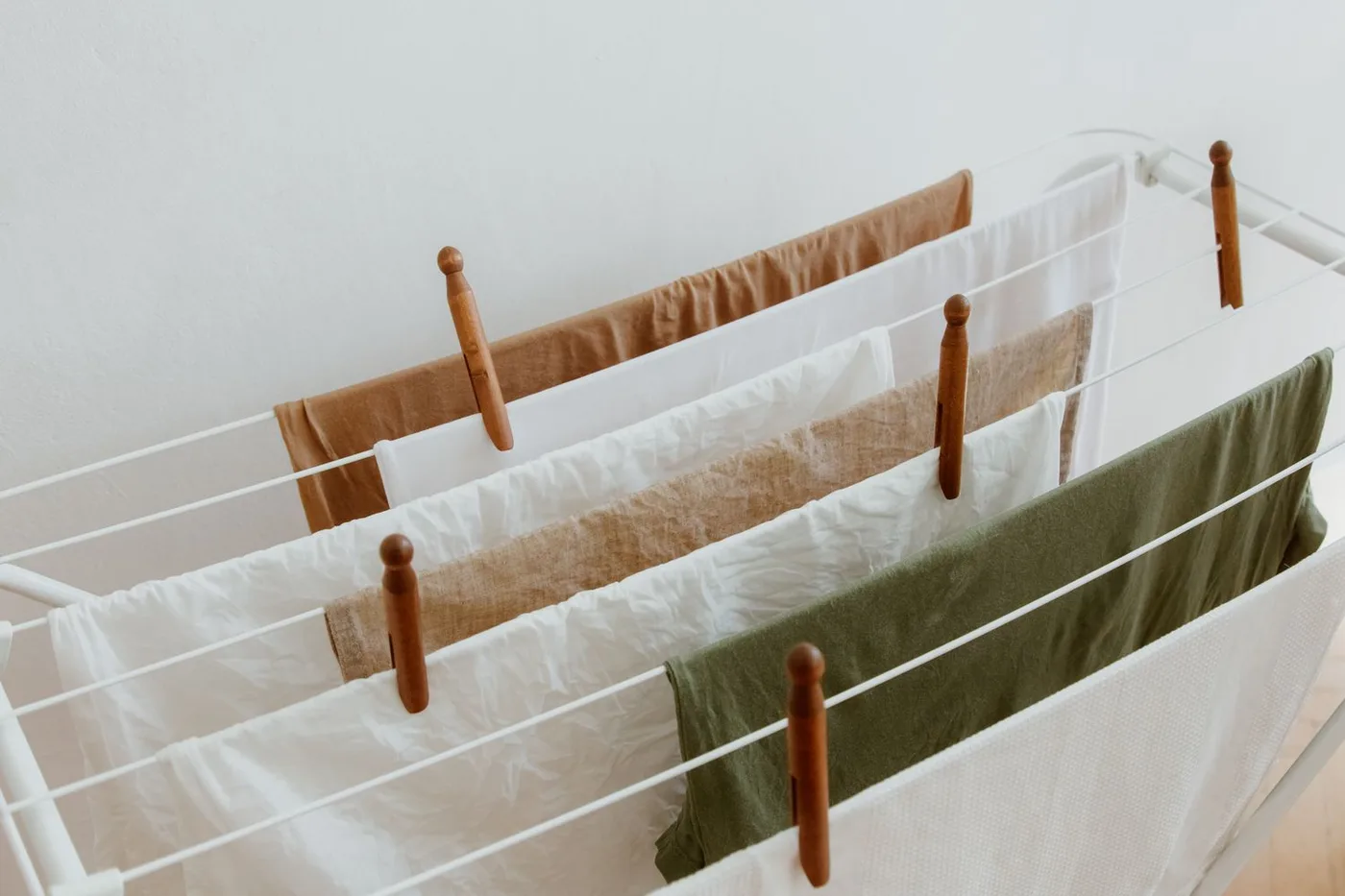
For laundry, choose a suitable drying method first. A dry-cleaning hanger kept from the last appointment may be fine for temporary transport yet unsuitable as permanent support. If you air-dry shirts on hangers, confirm that the hanger material is appropriate for damp use and that there is enough space for air around the garment.
Inspect the surfaces your clothes will touch
Run a hand over the shoulders, notches, and bar when possible. Look for rough joins, exposed sharp points, or a coating that rubs off. A non-slip surface can help some garments stay in place, but may make it harder to remove a delicate item smoothly. Test a small number before replacing the whole wardrobe.
IKEA's BUMERANG listing gives its width, solid-wood construction, and wipe-clean instructions. Use this kind of concrete detail to compare products. A wood label alone does not tell you shoulder width or finish quality. Likewise, a slim profile does not establish how much weight a hanger or your closet rail should hold.
Create a return space on laundry day
Leave a small reachable group of empty hangers where clean clothes are put away. If empties remain scattered through the rail, each load becomes a search. Move an empty hanger to that group when removing an outfit, and keep enough room around the clothes that returning a shirt takes only a moment.
Skip cascading connectors if they make the lower garments awkward to reach or overload one point. They can reorganize vertical space, but they do not increase the rail's allowed load. Check the closet system's instructions and avoid crowding clothes so tightly that they must be forced apart to find an outfit.
Buy one modest pack for the group that causes the most trouble. If shirts keep slipping, address that issue before purchasing new coat hangers. After a few weeks, evaluate shape, retrieval, and wasted space. A practical mixture is usually easier to justify than a complete replacement based only on appearance.
Shopping notes
Use these options as a starting point, then check dimensions, current materials, care instructions, availability, and the retailer’s return policy before ordering.
IKEA BUMERANG wooden hanger
Consider it for: Compare the published width and shaped wooden construction for garments that suit this support.
The tradeoff: A wooden hanger occupies more rail space than some slim styles; it is not automatically right for every garment.
Explore at the official site External merchant link · no affiliate commissionIKEA clothes hangers — merchant category
Consider it for: Use this category to compare ordinary, clip, coat, and smaller hanger formats.
The tradeoff: Check the individual width, surface, and care instructions. Category pictures can show garments with very different support needs.
Explore at the official site External merchant link · no affiliate commissionYour questions, answered
Should I replace every hanger with velvet or wood?
Only if that material and shape solve your actual clothing problems. Test a small group first; width, finish, and easy removal matter more than a uniform material.
Can I hang every sweater?
Follow the garment’s care needs and consider its weight and construction. Fold items that risk stretching rather than assuming a shaped hanger makes all knitwear suitable for hanging.
Do cascading hooks create more closet capacity?
They can rearrange space vertically, but they do not increase the closet rail’s load limit. Make sure lower garments remain easy to remove and return.
Sources & further reading
Product and care details were checked against the sources below on October 18, 2026. Our practical recommendations are editorial judgments, and a listed source does not imply endorsement.
- IKEA BUMERANG dimensions, materials, and careChecked 2026-10-18
- FTC: Clothes Captioning and Care InstructionsChecked 2026-10-18