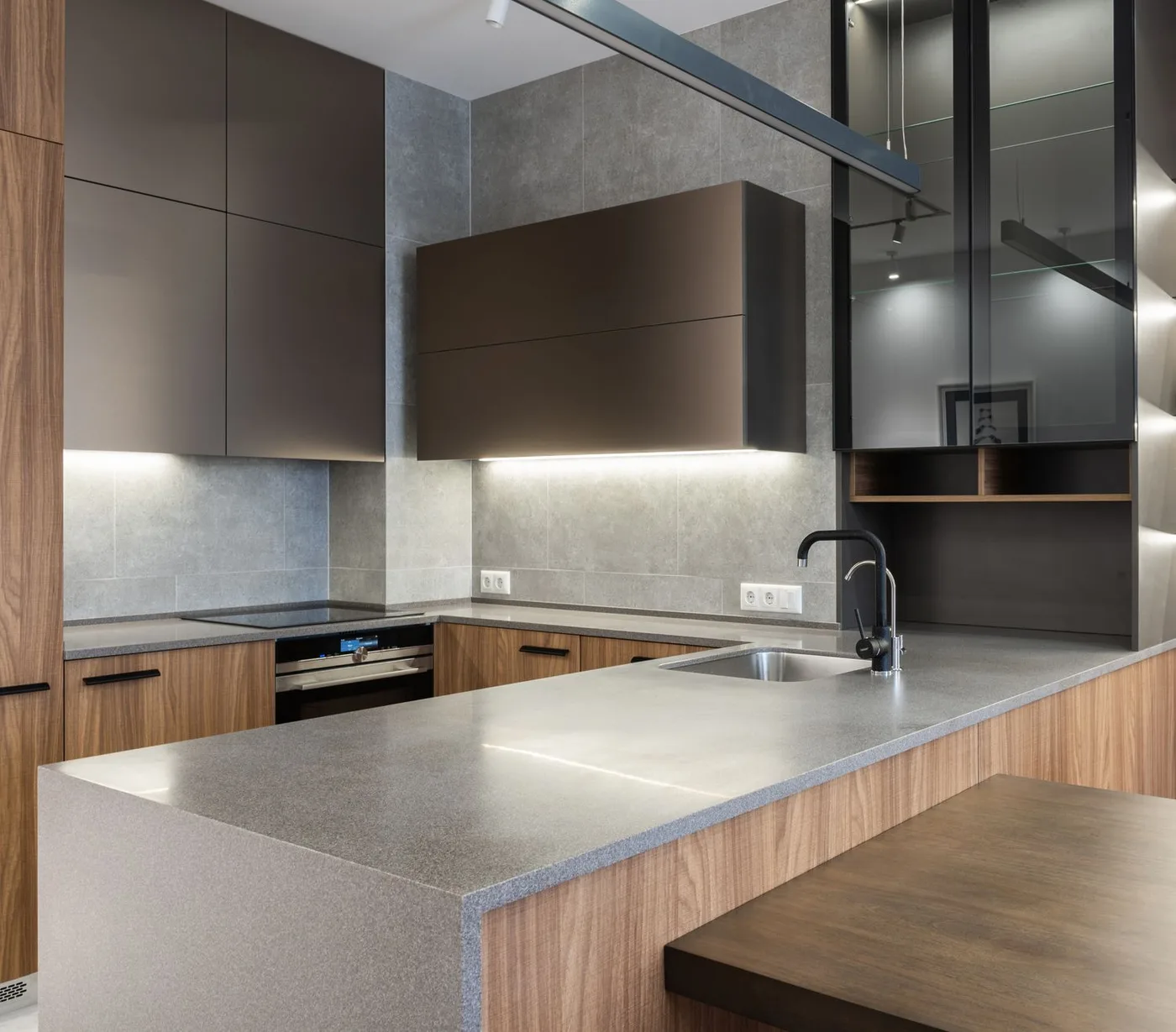
Dinner in a small kitchen often begins with moving things: the coffee grinder, yesterday's mail, a drying pan, and the bottle that never found a cupboard. The problem is rarely the absence of another shelf. It is that several routines are competing for the same patch of counter.
This plan is for an apartment kitchen or a compact family kitchen where the worktop has to handle breakfast, meal preparation, and cleanup. The aim is a surface that resets easily, with purchases tied to a specific interruption rather than a photograph of a perfect room.
Protect one continuous prep area first, then give daily tools a home around it. Buy organizers only after a week of observing what gets in the way.
Start with the meal you actually make
Put your usual cutting board on the counter and place an empty bowl beside it. Rehearse making a familiar dinner: taking vegetables from the refrigerator, chopping, reaching for a pan, and carrying scraps to the trash. Notice what you move and where your elbows catch. Mark that uninterrupted board-and-bowl area as the prep zone.
A narrow kitchen benefits more from one useful stretch than several small clear gaps. Move decorative jars first. Then relocate anything used once a week or less to an accessible cabinet. Keep the counter arrangement provisional until you have cooked several ordinary meals.
Sort appliances by effort, not affection
A kettle used every morning may deserve permanent space. A large mixer used monthly may not, unless lifting it creates a real barrier. Weigh frequency against handling difficulty: a lightweight blender can travel to a shelf more easily than a heavy appliance. Choose a storage spot you can reach without climbing or twisting.
Check the appliance manual before operating beneath cabinets or near water, and maintain the required ventilation and clearances. An attractive appliance garage is not permission to run every appliance inside it. Keep cords out of the prep area and avoid arrangements that require stretching a cord across the sink.
| Routine | Counter choice | Likely tradeoff |
|---|---|---|
| Daily coffee | One small station near a suitable outlet | Uses space even after breakfast |
| Occasional baking | Store the mixer if manageable | Requires lifting and setup |
| Nightly cooking | Protect the cutting-board area | Fewer decorative items |
Build three small working zones
Place the washing tools by the sink, the board near your ingredients, and frequently used cooking tools within a comfortable reach of the stove. These can be tiny zones. A utensil pot holding four useful tools is more effective than one packed with everything you own. Keep spare spatulas elsewhere.
A tray can contain coffee supplies or oil bottles, but measure its footprint. Include room to lift it without knocking neighboring objects. A tray that occupies the entire prep surface creates another obstacle. IKEA's countertop organization guidance offers examples of grouping daily supplies; adapt the idea to your meal routine rather than buying every matching accessory.
Use vertical storage selectively
A freestanding riser can create space for mugs above plates, provided the items below remain easy to remove. Test the height with your tallest mug and check that the riser sits steadily. Wall rails need secure installation and landlord permission where required. Do not hang heavy tools from an adhesive hook without checking its instructions and the wall surface.
Keep combustible storage away from cooking heat. NFPA specifically advises keeping items such as towels, packaging, and wooden utensils away from the stovetop. That rules out some appealing rail arrangements immediately above a burner. Storage should make reaching safer as well as easier.
Give the sink a closing routine
A dish rack often becomes permanent storage because putting things away requires opening several crowded cabinets. Fix that destination before buying a smaller rack. Place everyday plates together, reserve a clear shelf for glasses, and remove duplicates that block the cupboard.
After the final wash, put away dry pieces, drain the tray, and leave wet items spaced apart. If handwashing happens only occasionally, consider a folding rack that has a real storage location when closed. If you wash large pans nightly, a stable full-time rack may be the more practical choice even though it occupies more space.
Spend only after the one-week trial
Keep a short note of the recurring problem: bottles spreading, knives without a safe home, or wet cups blocking vegetables. Match one purchase to that problem. Prefer washable, removable pieces over a complicated system that prevents wiping the counter.
Before ordering, make a paper footprint of the organizer and leave it in place through a cooking session. Open nearby drawers and cabinet doors. The successful purchase is the one that lets dinner proceed with fewer interruptions, even if it holds fewer objects than the larger alternative.
Shopping notes
Use these options as a starting point, then check dimensions, current materials, care instructions, availability, and the retailer’s return policy before ordering.
IKEA UPPDATERA flatware caddy
Consider it for: A small collection of daily utensils that needs to move between counter and table.
The tradeoff: Its footprint still needs to fit outside your preparation area; check the listed dimensions.
Explore at the official site External merchant link · no affiliate commissionYour questions, answered
Should every appliance leave the countertop?
No. Keep the items whose daily use or handling difficulty justifies the space. The useful question is whether each object saves more work than it creates during cooking and cleanup.
Is a corner organizer always space-saving?
Only when you can reach everything without moving the organizer. Make a full-size paper template and check the usable opening; a large footprint can consume the space it promises to recover.
What should I buy first?
Usually nothing. Clear a preparation area, assign homes to existing tools, and observe a week of meals. Buy a single accessory when you can name the repeated problem it solves.
Sources & further reading
Product and care details were checked against the sources below on October 18, 2026. Our practical recommendations are editorial judgments, and a listed source does not imply endorsement.
- IKEA: How to organize kitchen countersChecked 2026-10-18
- NFPA: Cooking SafetyChecked 2026-10-18
- IKEA: UPPDATERA flatware caddyChecked 2026-10-18