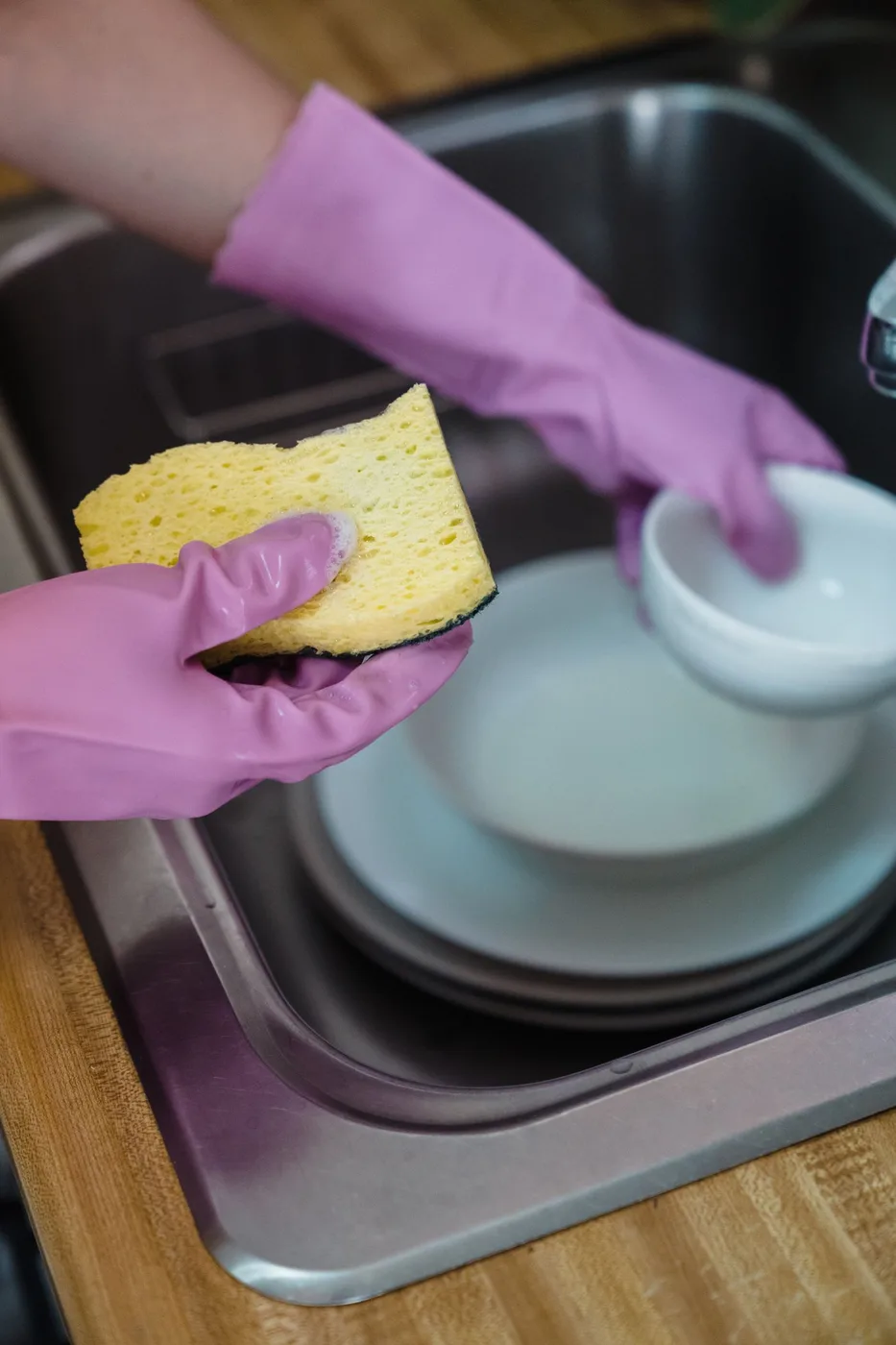
Two sponges, a leaning brush, and a soap bottle can take over the narrow strip behind a kitchen sink. Buying a caddy sometimes gathers that clutter into one object without solving the puddle underneath it. Begin with where water will go and how the holder will be washed.
A useful sink station supports the way your household cleans dishes. Someone washing large pots in a single basin may value every inch inside it, while another kitchen may have more basin room than counter space. The right trade is specific to the sink.
Choose a caddy around drainage, cleaning access, and your actual sink geometry. Keep only the tools in regular use, with backups stored elsewhere.
Edit the tools before measuring
Remove old duplicates and identify the tools you reach for every day. A brush, one appropriate sponge or cloth, and dish soap may cover the normal routine. Store special-purpose scrubbers somewhere suitable until they are needed, rather than letting them accumulate wet behind the tap.
Measure the tallest brush and widest bottle together. A deep brush pocket can tip a short brush into an awkward position, while a narrow bottle compartment may reject the soap you already buy. The organizer should fit your supplies, or there should be a clear reason to change them.
Map the sink's moving parts
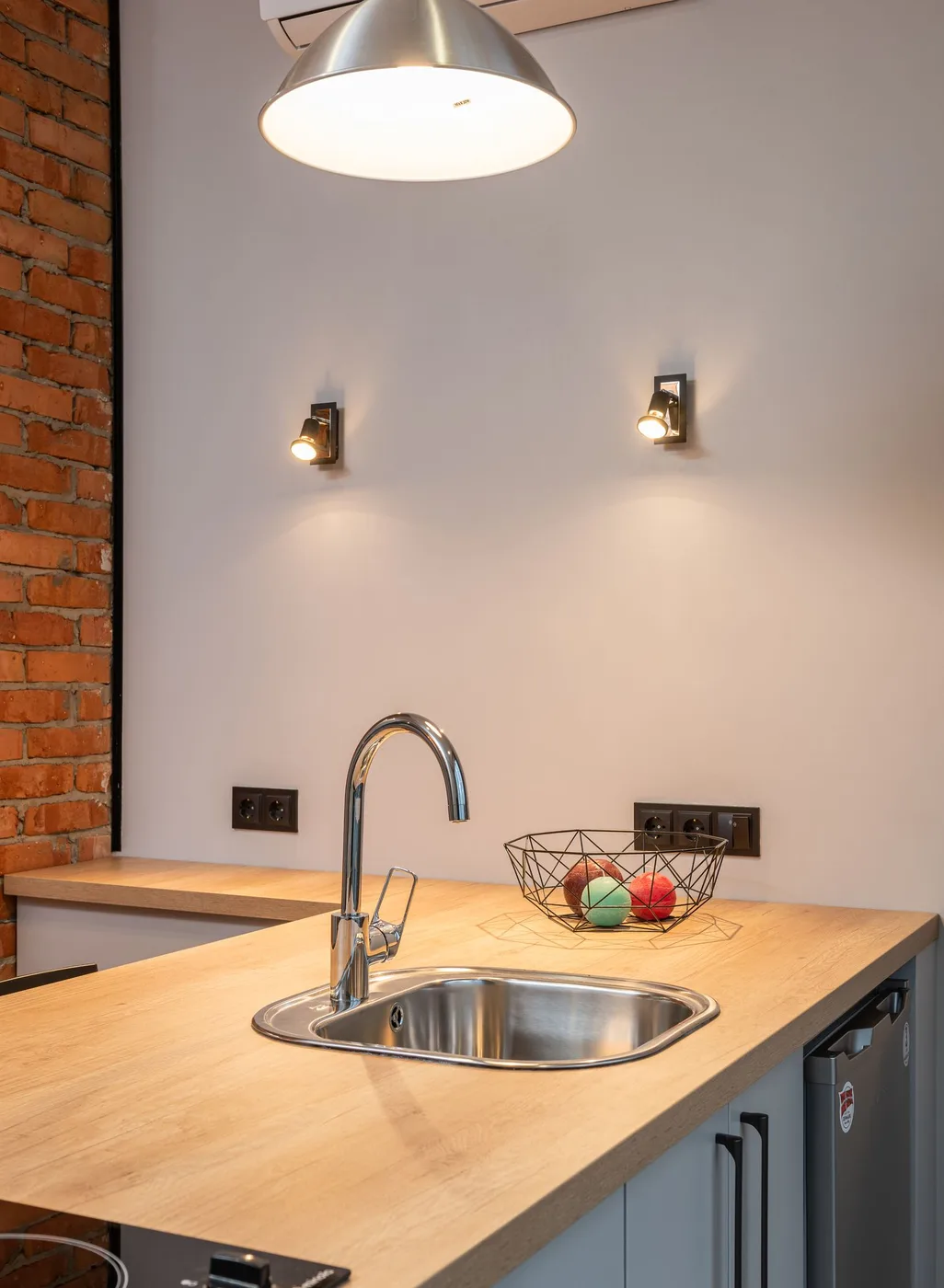
Run the faucet through its full range and pull out any spray head. Open the nearby window and check the backsplash depth. A holder placed behind the faucet can obstruct handles or make window cleaning harder. An in-basin caddy may interfere with a colander or catch a large pot handle.
Inspect the surface where a caddy would attach. Suction products have instructions about suitable surfaces and preparation; a textured basin or a heavily curved wall may not provide the intended fit. Do not assume a photograph of a different sink establishes compatibility with yours.
Choose drainage you can inspect
A perforated holder positioned inside the sink can return drips to the basin, but it still needs cleaning. A countertop tray protects the immediate surface only if the collected water is emptied and the underside is checked. A closed-bottom cup can become a reservoir if a wet brush is repeatedly dropped into it.
Look for removable parts and openings you can reach with your normal cleaning tools. Tiny channels that cannot be inspected are a poor match for a household that wants quick maintenance. Prioritize the ability to lift the entire station and wipe beneath it without moving several unrelated items.
| Style | Useful when | Main compromise |
|---|---|---|
| In-sink caddy | Counter space is limited | Uses washing-basin space |
| Countertop draining holder | Sink rim is narrow or unsuitable | Requires tray and underside care |
| Small removable tray | Only soap and one tool need grouping | Water must be managed manually |
| Wall-mounted holder | Suitable secure mounting is available | Installation and surface compatibility |
Separate cleaning from storage claims
A ventilated caddy provides a place for tools to drain; it does not clean them or make a worn sponge appropriate to keep indefinitely. Follow the tool maker's cleaning and replacement advice. Keep raw-food cleanup and routine dishwashing procedures distinct where the relevant food-safety guidance requires it.
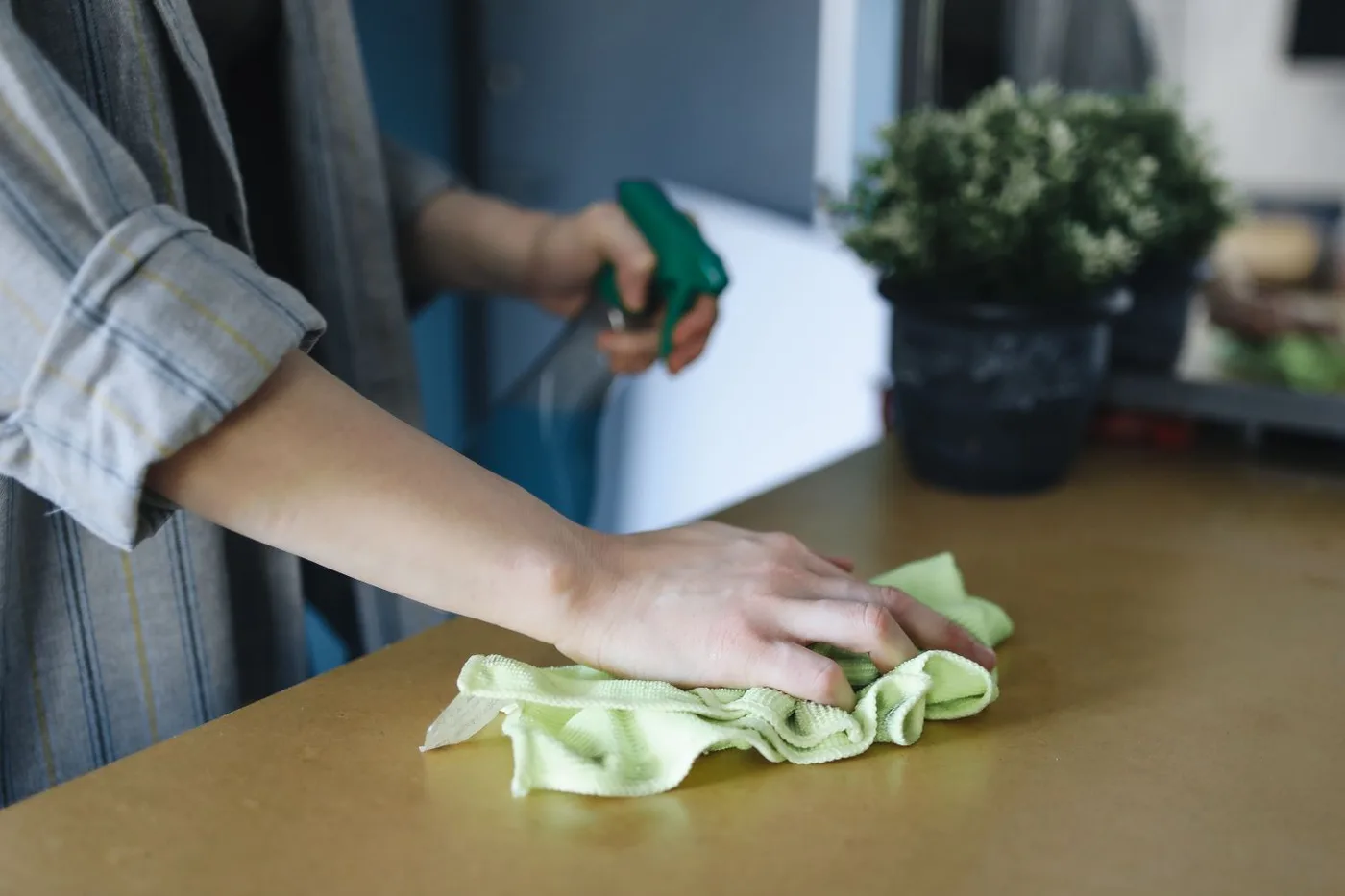
CDC distinguishes ordinary cleaning from sanitizing and disinfecting, and says to clean before further treatment when needed. Apply that distinction to the sink area rather than assuming a tidy holder establishes hygiene. Use products suitable for the sink material and follow the label, including any rinse requirements.
Evaluate a product in your own geometry
The simplehuman Sink Caddy is a concrete example to compare when considering in-sink storage. Its official page supplies the current product information; check its attachment system and dimensions against your basin. The editorial reason to consider that style is reclaimed counter space, not an assumption that it fits every sink.
Before ordering any holder, tape its outline onto the proposed location and wash your largest pot. See whether your wrist or the pot catches it. If it does, a modest countertop tray may be more useful despite taking a little counter space. Keep packaging until fit and attachment have been checked.
Make the reset shorter than the mess
At the end of washing, remove food debris, rinse and care for tools as instructed, and leave them arranged for drainage. Empty any tray instead of returning clean tools to standing water. During routine cleaning, lift the caddy and inspect its feet, attachment points, and the surface underneath.
Keep refills away from the wet station. A giant spare bottle may save purchase trips but does not need to occupy the sink edge. Buy the smallest holder that accommodates the working tools comfortably; extra compartments are an invitation to keep objects that could have another home.
Shopping notes
Use these options as a starting point, then check dimensions, current materials, care instructions, availability, and the retailer’s return policy before ordering.
Simplehuman Sink Caddy
Consider it for: A compatible sink where moving everyday tools into the basin would release useful counter space.
The tradeoff: Check attachment compatibility and the space needed for large pots before choosing an in-sink holder.
Explore at the official site External merchant link · no affiliate commissionYour questions, answered
Is a draining caddy self-cleaning?
No. Drainage helps manage water, but the caddy and tools still need appropriate cleaning. Choose a holder whose corners, underside, and attachment points you can inspect and reach.
Can I keep a wet sponge inside a closed box?
A closed container is a poor default drying place. Follow the sponge's care instructions and choose a setup that allows appropriate drainage and drying between uses.
What if suction cups will not hold?
Check the maker's surface and installation requirements. If your sink is unsuitable, choose a different mounting method or a removable countertop holder instead of repeatedly loading an unreliable attachment.
Sources & further reading
Product and care details were checked against the sources below on October 18, 2026. Our practical recommendations are editorial judgments, and a listed source does not imply endorsement.
- Simplehuman: Sink CaddyChecked 2026-10-18
- CDC: When and How to Clean and Disinfect Your HomeChecked 2026-10-18