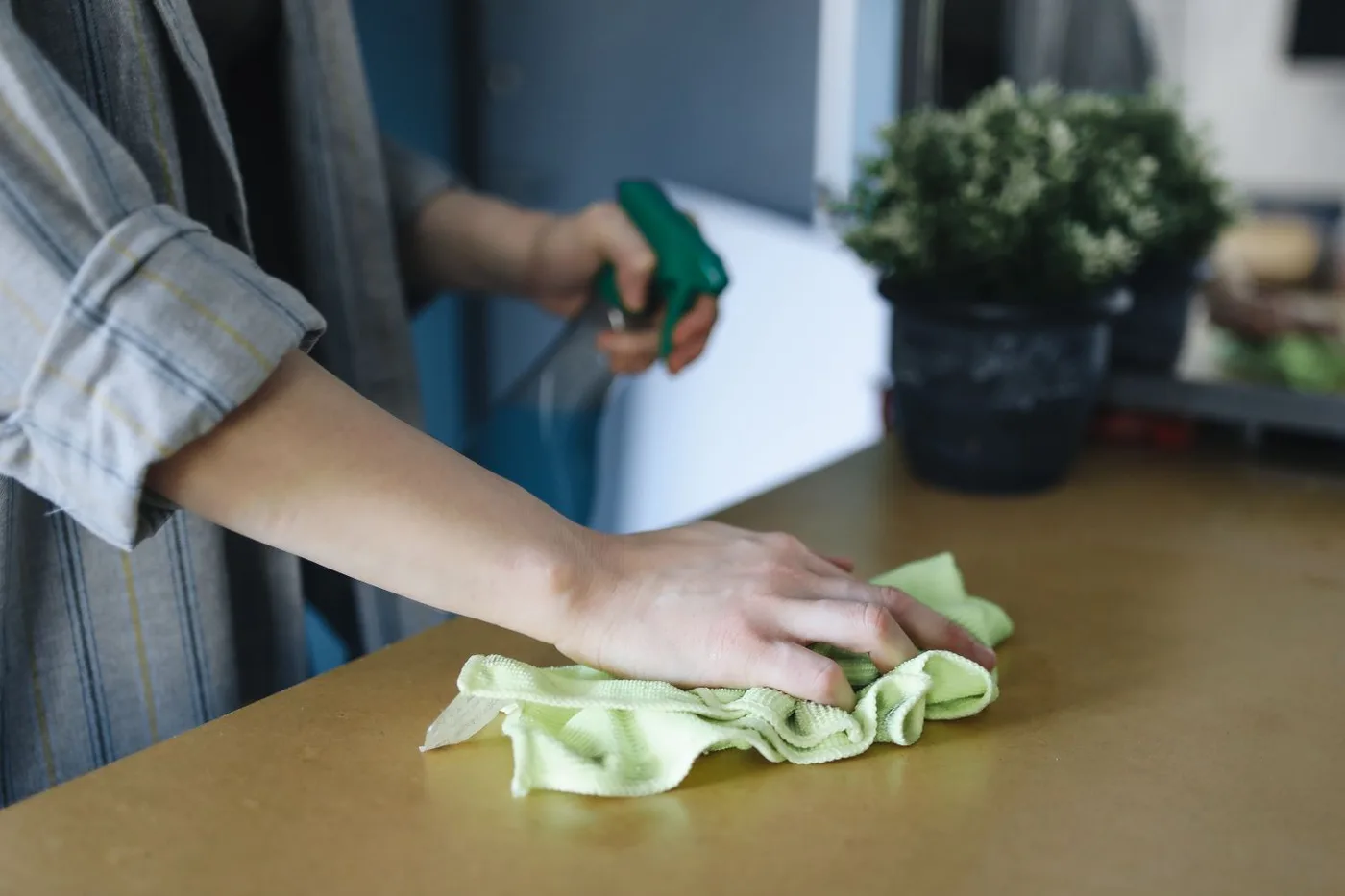
A quick bathroom clean becomes slow when the brush is upstairs, the cloths are under the kitchen sink, and the only usable spray is hidden behind half-empty bottles. A caddy helps when it gathers a small working kit. It becomes another problem when it is heavy enough to require two hands and contains products for every possible job.
For an apartment or a two-story home, build a portable kit for the surfaces cleaned most often. Keep occasional products in appropriate secure storage. The caddy is a way to carry tools during use; it is not permission to leave household chemicals within reach of children or pets.
Choose the tasks first, keep cleaners in their original containers, and load only what is needed for the current round.
Write down the tasks in one cleaning round
Choose a realistic route, such as the bathroom sink, mirror, and counter, or the kitchen's non-food-contact exterior surfaces. Look up the care instructions for those surfaces before selecting products. Natural stone, finished wood, stainless steel, and coated fixtures may need different treatment. A bottle labeled multipurpose still has directions and exclusions.
Keep a specialized toilet brush in its own appropriate holder instead of placing it beside general cloths. Likewise, tools used for heavy grime should not return to the clean-tool section without being cleaned as directed. Organizing by task is more useful than collecting every bottle with the same label color.
Pack a small working kit
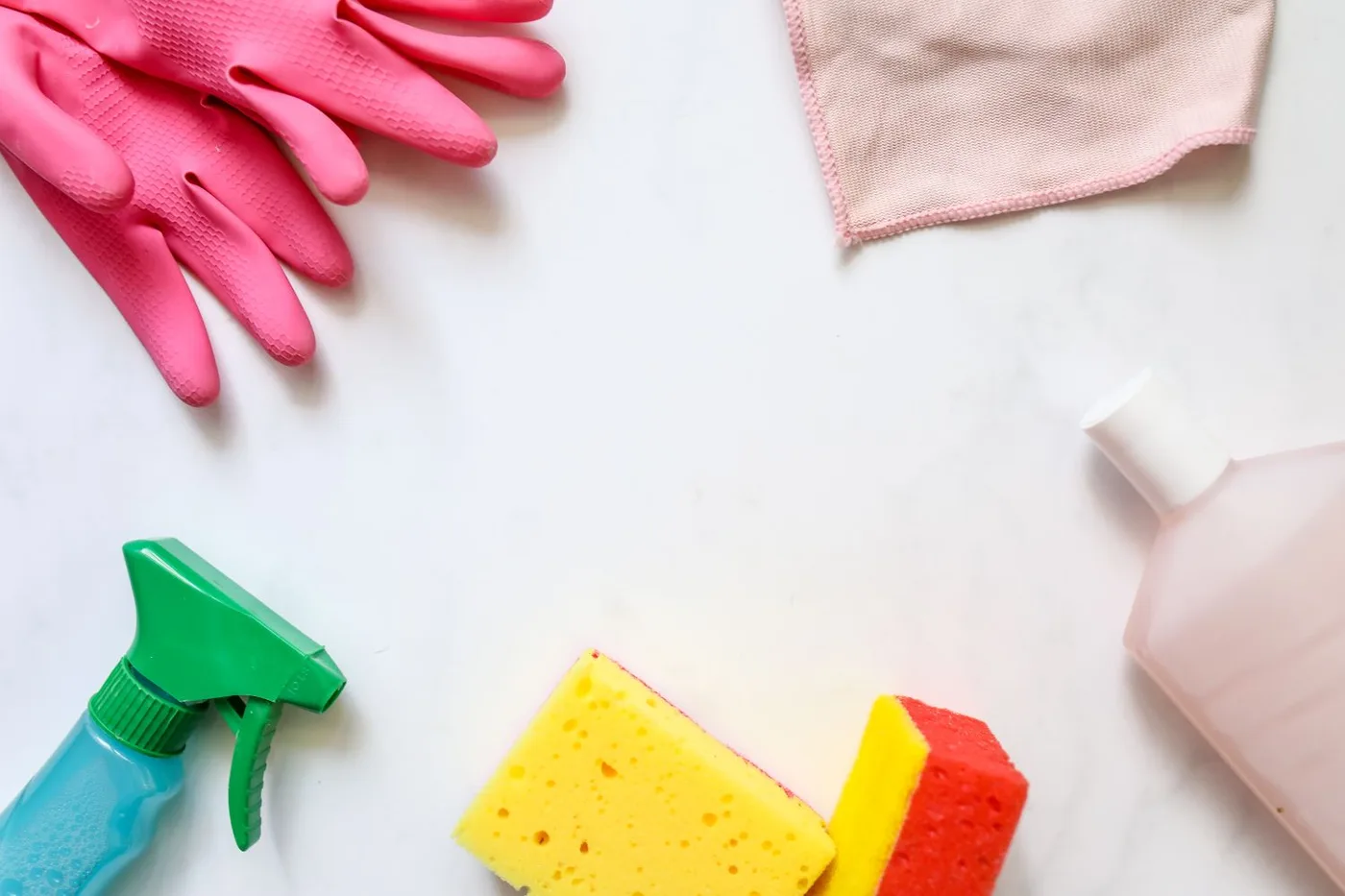
Begin with a few clean cloths, an appropriate brush, any protective equipment specified on the product label, and the product or products required for the planned work. Use a separate place for used cloths so they do not get pushed back among unused ones. Leave enough space around handles to lift bottles without catching triggers.
| Item | Why it belongs | Boundary |
|---|---|---|
| Clean cloths in a separate compartment | Available for the planned surfaces | Keep used cloths out of the clean stack |
| Task-appropriate cleaner | Matches the surface instructions | Original container and readable label |
| Small detail brush | Reaches a named awkward area | Keep toilet-use tools separate |
| Required protective equipment | Follows product directions | Check condition and correct fit |
| Small waste bag | Collects ordinary cleaning rubbish | Do not use for incompatible chemical waste |
Keep product identity and storage instructions intact
EPA advises keeping household chemicals in their original containers and preserving their labels. Do not pour cleaners into drink bottles or decorative unmarked dispensers to make the caddy look coordinated. Original labels contain directions, precautions, and other information that remains useful after the first purchase.
Never mix cleaning products together. Use each product according to its directions, including ventilation, required contact time where relevant, and storage requirements. When comparing everyday cleaners, EPA's Safer Choice directory offers a way to identify products meeting that program's standard. The label does not remove the need to follow directions or verify surface compatibility.
Choose a caddy you can clean and lift
Measure the tallest bottle, including its spray head, then check the caddy's usable interior and handle clearance. A deep bucket can conceal small brushes, while a shallow tray may let tall bottles tip. Look for a stable base and a layout that keeps the load balanced without forcing a hand against a nozzle.
A removable tray can be useful if it separates clean tools from the bucket below, but review how the pieces fit and are maintained. IKEA's PEPPRIG bucket-and-caddy listing provides an example of that format. Buy it because the layout matches your tools, not because a larger bucket appears to offer better value.
Finish with a reset, not a cupboard pile
After the cleaning round, close containers as directed, clean tools appropriately, and let reusable items dry before putting them away. Return products to their proper secure storage. A caddy containing chemicals should follow the same access restrictions as the individual products; an open handle does not make it a safe permanent display.
Inspect for leaks and residue. Follow the product label if a container is damaged, and use local guidance for disposal of household hazardous waste. Do not combine leftover products to save space. A practical kit also has an exit route for an empty bottle so it does not remain in the caddy by habit.
Skip bundles full of duplicate sprays, oversized compartments that encourage overpacking, and decorative materials you cannot maintain easily. If the existing basket is stable, easy to clean, and fits the supplies, keep it. A useful system may require fewer purchases than the caddy photograph suggests.
Shopping notes
Use these options as a starting point, then check dimensions, current materials, care instructions, availability, and the retailer’s return policy before ordering.
IKEA PEPPRIG cleaning bucket and caddy
Consider it for: Compare its removable-tool-storage layout if you need a bucket for a defined cleaning routine.
The tradeoff: The full setup takes more space than a simple tray. Measure the storage area and consider the loaded carrying weight.
Explore at the official site External merchant link · no affiliate commissionSterilite Small Ultra Basket
Consider it for: An official small-basket option to compare for clean tools that need visibility and easy access.
The tradeoff: It is a basket rather than sealed chemical containment. Store all products according to their own directions.
Explore at the official site External merchant link · no affiliate commissionYour questions, answered
Should I keep one caddy for the whole house?
A small portable kit can work, but separate tools by their actual use. Do not carry toilet-use tools alongside general clean cloths.
Can I use matching refill bottles?
Follow the product’s labeling and refill instructions. Keep household chemicals in their original containers unless the maker provides a compatible, clearly labeled refill system.
Does Safer Choice mean a cleaner is suitable for every counter?
No. The program concerns its product standard. You still need to check the cleaner’s directions against the countertop manufacturer’s care guidance.
Sources & further reading
Product and care details were checked against the sources below on October 18, 2026. Our practical recommendations are editorial judgments, and a listed source does not imply endorsement.
- EPA: Keep Pesticides and Household Chemicals in Original ContainersChecked 2026-10-18
- EPA: Search Products that Meet the Safer Choice StandardChecked 2026-10-18
- IKEA PEPPRIG official materials and careChecked 2026-10-18
- EPA: Household Hazardous WasteChecked 2026-10-18