The cabinet under the kitchen sink is an awkward place to organize: the plumbing interrupts the space, the back is hard to see, and the products are often bottles you should not decant into prettier jars. A towering pullout that looks efficient online may fail as soon as the door closes.
Treat this project as a storage and access problem. The best arrangement lets you take out everyday supplies, see a small leak, and reach plumbing without dismantling an elaborate installation.
Leave plumbing and shutoff access clear. Use a few removable containers for compatible products, and prioritize safe storage over fitting every bottle under one sink.
Empty it before you measure it
Take everything out and check the cabinet floor, joints, and exposed surfaces for dampness or damage. Resolve an active leak before adding organizers. Do not cover an unexplained wet patch with a new mat. Photograph the empty cabinet and note the pipes, disposal, hoses, outlets, hinges, and shutoff valves.
Measure the usable opening as well as the interior. A wide shelf can fit behind a narrow door frame and still be impossible to install or remove. Record the height beneath the lowest obstruction and the space swept by the hinges. Keep a clear route to anything that may need service.
Reduce the collection without mixing products
Group bottles by their labeled purpose and follow their storage instructions. EPA advises keeping hazardous household products in original containers with their labels intact, and never storing them in food containers. The uniform refill-bottle look is a poor goal for this cupboard.
Set aside products you cannot identify or no longer need and check local household-hazardous-waste disposal guidance. Do not combine remnants to save space. If multiple products serve the same task, keep only what you can store safely and use as directed; purchasing smaller quantities may be easier than finding space for bulk backups.
Choose access before capacity
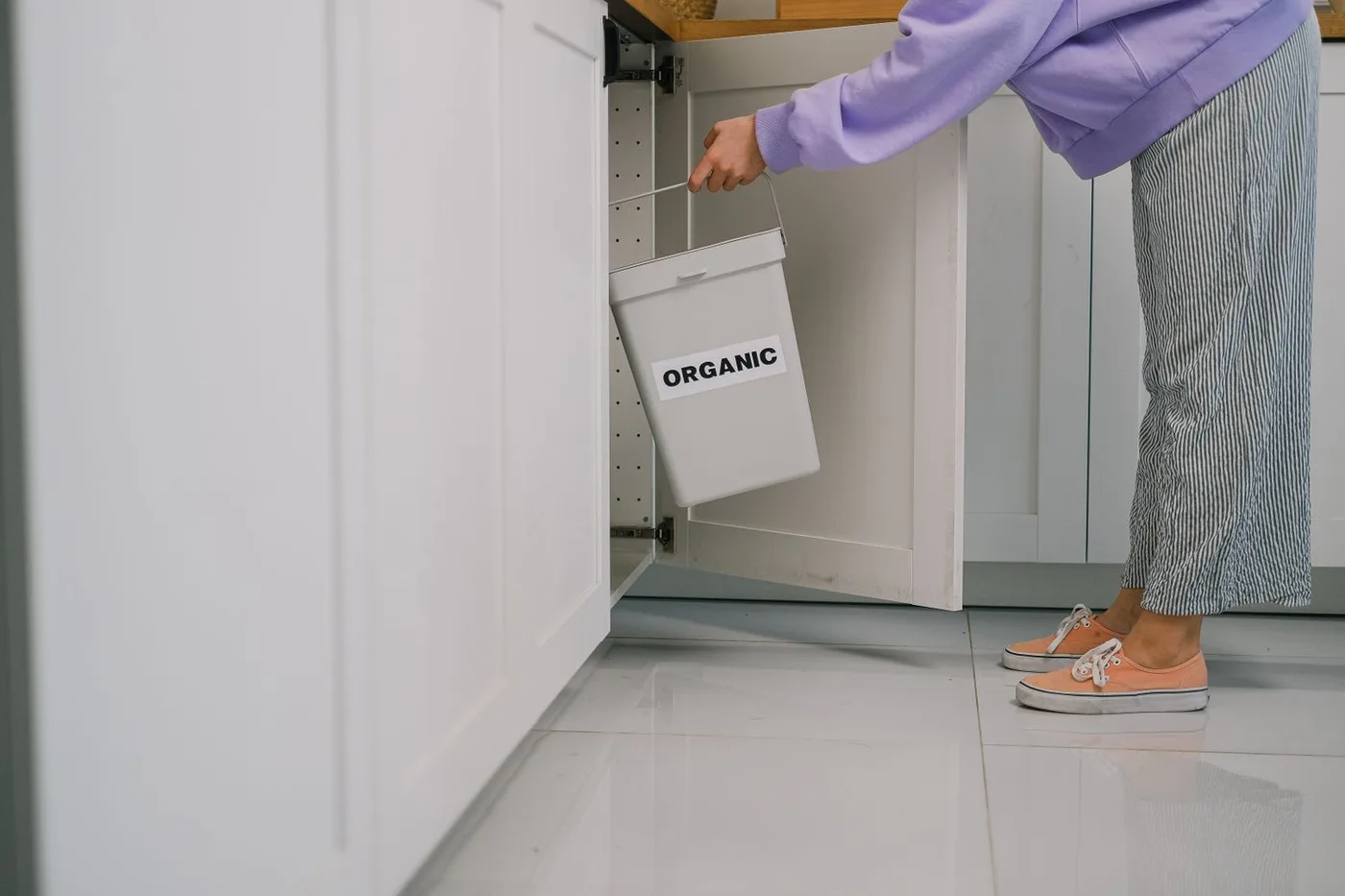
A removable handled bin is a useful starting point because it can travel to the work area and lift out for plumbing access. Choose a base that supports bottles upright and lets you see their labels. Leave room to lift a full bin without scraping the underside of the sink.
A pullout may help in a deep cabinet, but check its full travel, mounting requirements, and interference with pipes. A freestanding shelf avoids drilling but can block a shutoff just as easily as a fixed unit. Neither option is automatically better than a simple shallow basket.
| Option | Good fit | Main limitation |
|---|---|---|
| Handled removable bin | A few everyday bottles | Can become heavy when overfilled |
| Low freestanding shelf | A clear area beside plumbing | Needs stable feet and overhead clearance |
| Mounted pullout | Deep unobstructed cabinet section | Installation and service access |
| Door-mounted holder | Light items with verified clearance | Can hit pipes or strain the door |
Separate daily supplies from backups
Place the most frequently used, compatible supplies at the front. Keep dry cloths in a separate clean location if the cabinet is humid or contains products that could leak. Store extra bottles elsewhere when the label permits; one crowded cabinet is not an achievement if it makes every cleaning job slower.
A low-sided tray can help you notice a small spill, but it does not make incompatible chemicals safe to store together. Do not rely on an ordinary organizer as secondary containment for a product that requires a particular storage arrangement. Follow the label whenever it conflicts with a visual organizing idea.
Account for children, pets, and other users
CDC advises storing cleaning and disinfection chemicals out of the reach of children and pets. An under-sink cabinet may therefore be the wrong destination for some households. Use suitable secure storage and do not treat a convenient basket or an ordinary latch as a complete safety measure.
Check that other adults can locate the supplies and understand the arrangement. Plain labels such as 'dishwashing' and 'surface cleaning' are more useful than decorative names. Keep product labels facing forward. If someone cannot comfortably lift a loaded caddy, split the contents into smaller groups.
Build in a quick inspection
Choose a liner only if it can be lifted and dried easily. A washable mat may simplify cleanup, but it can also conceal moisture underneath. Leave the cabinet floor visible enough to inspect and check beneath removable accessories during routine cleaning.
At the end, open both doors, remove each bin, and reach the relevant plumbing controls without touching electrical components or making repairs. If access feels awkward now, revise the layout. Revisit the cupboard after the first grocery restock, because backups and spare bags are the items most likely to undo the plan.
Shopping notes
Use these options as a starting point, then check dimensions, current materials, care instructions, availability, and the retailer’s return policy before ordering.
IKEA UPPDATERA box
Consider it for: A simple removable bin for suitable items in a measured unobstructed cabinet area.
The tradeoff: An ordinary organizer is not chemical-safe storage or a child-resistant enclosure; verify dimensions, load, and intended use.
Explore at the official site External merchant link · no affiliate commissionYour questions, answered
Can I hang spray bottles from a tension rod?
Only if the rod and mounting arrangement are intended to support that load, and the bottles remain secure. A supported bin is often easier to inspect and remove. Never position bottles where a fall could damage plumbing or electrical parts.
Should every cleaning product live under the sink?
No. Product labels, household access needs, and cabinet conditions determine suitable storage. Children, pets, moisture, or a crowded service area can make another secure location the better choice.
Is a waterproof liner enough for a leaking cabinet?
No. Fix the cause of the leak and dry the cabinet before organizing. A liner can help with minor cleanup but can also hide trapped moisture if it is not removed and inspected.
Sources & further reading
Product and care details were checked against the sources below on October 18, 2026. Our practical recommendations are editorial judgments, and a listed source does not imply endorsement.
- EPA: Household Hazardous WasteChecked 2026-10-18
- CDC: When and How to Clean and Disinfect Your HomeChecked 2026-10-18
- IKEA: UPPDATERA boxChecked 2026-10-18