A first frying pan often has to cook a rushed breakfast, two portions of dinner, and whatever needs reheating the next day. Buying the most versatile material sounds sensible until its everyday compromise lands on your least favorite task: unsticking eggs, lifting a heavy pan, or washing a surface you expected to put in the dishwasher.
The useful question is which compromise you will accept repeatedly. This guide compares three materials and three current product examples using published manufacturer information. The buying rules and household scenarios are our editorial judgments; the specifications are not results from comparative cooking tests.
Choose coated nonstick for frequent delicate breakfasts, uncoated stainless steel for browning followed by sauces, or seasoned cast iron when its weight and immediate drying routine fit your kitchen. Burner compatibility, usable cooking area, and safe handling eliminate unsuitable choices before brand comparisons begin.
Use your next five meals as the first filter
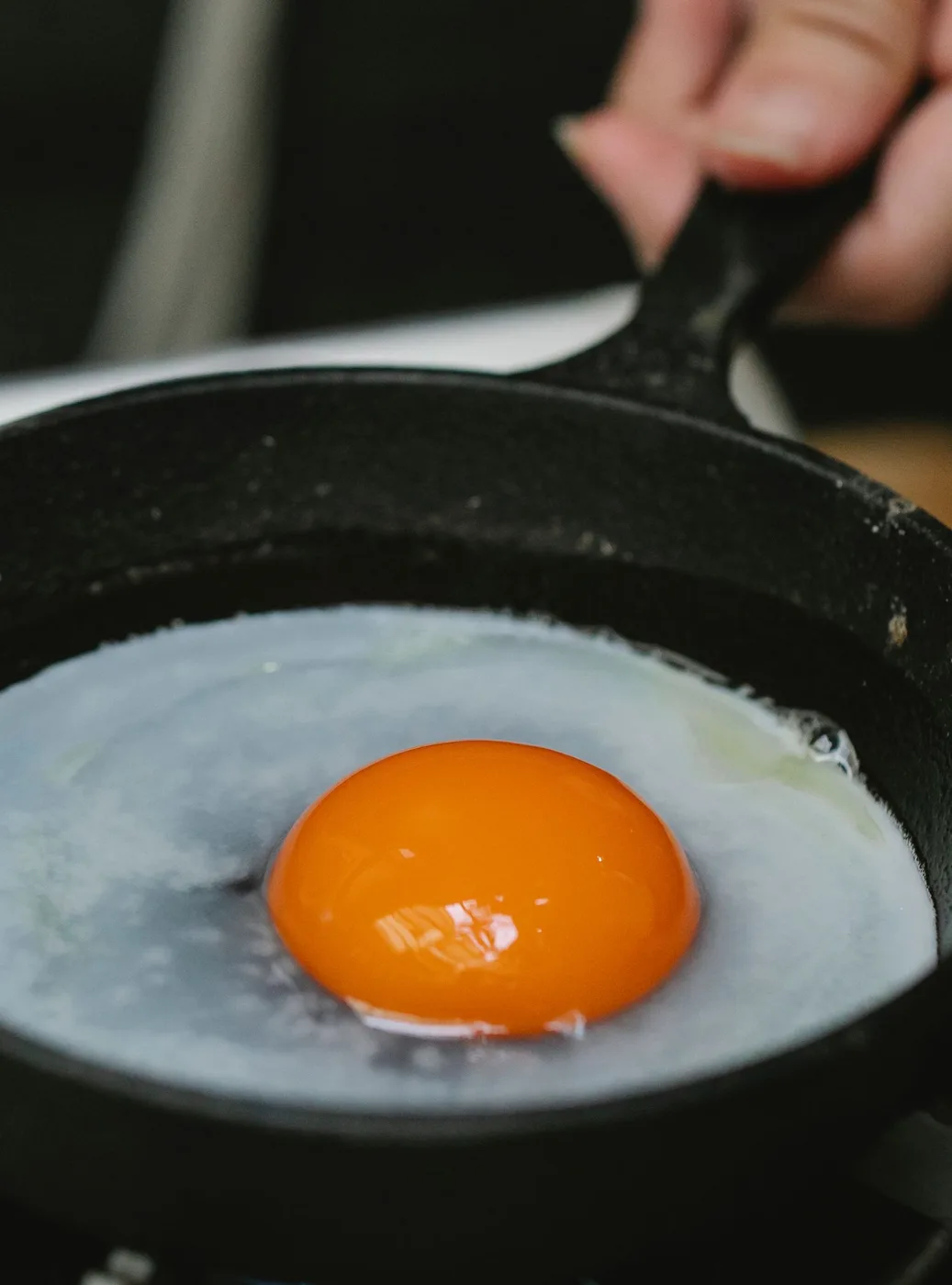
Write down five meals you are likely to cook this week, rather than five dishes you hope to master eventually. Mark each as delicate food release, browning with a sauce, or a substantial sear followed by an oven finish. If eggs, pancakes, and fragile fish dominate, start your shortlist with coated nonstick. If chicken with a lemon sauce and tomato-based dinners dominate, uncoated stainless deserves the first look.
Cast iron becomes a stronger candidate when you want a substantial skillet for searing or skillet baking and can comfortably handle its weight. It becomes a weaker first purchase when your normal dinner involves a long acidic simmer or you routinely leave cookware soaking overnight. Choosing for those habits is more useful than selecting the material with the most enthusiastic online following.
- Eliminate any pan the manufacturer does not approve for your exact cooktop type.
- Eliminate a pan you cannot move safely when loaded, even if its empty weight sounds manageable.
- Eliminate a care routine your household will not follow; then compare the remaining candidates against your most frequent meal.
- Buy one suitable pan before a matching set. Add a second material only when the first leaves a recurring cooking job unresolved.
Compare the cooking job and the ownership cost
These are practical distinctions, not scores. A nonstick surface can still brown food, and an experienced cook can prepare eggs in stainless steel. The comparison asks which material makes a particular job more forgiving without demanding a technique or maintenance routine you do not want.
Swipe left or right to compare all columns ↔
| Decision dimension | Uncoated stainless steel | Coated nonstick | Seasoned cast iron |
|---|---|---|---|
| Frequent eggs or fragile fish | Requires attention to heat, fat, and release timing | A sensible starting point when easy release is the priority | Possible with suitable seasoning and technique; not a guaranteed shortcut |
| Browning followed by a pan sauce | Useful when browned residue is part of the recipe | Less compelling when sauce-making is the main reason for buying | Consider the acidity and cooking duration before choosing |
| High-heat habits | Use the maker's directions; high heat is not a default requirement | Respect the coating's heat restrictions | Preheat gradually and follow the skillet's instructions |
| Surface maintenance | No nonstick coating to preserve; residue may need soaking or scrubbing | Protect the coating from unsuitable utensils and abrasives | Dry promptly and maintain the seasoning |
| Lifting and storage | Check the particular model and handle geometry | Check the particular model; material name alone does not establish weight | Check loaded handling carefully, particularly without a helper handle |
| Reason to skip | You want effortless delicate breakfasts without adapting technique | You want broiler use or are unlikely to protect a coating | You cannot manage the weight or immediate care routine |
Measure the flat base, burner, and handle clearance
A nominal ten-inch pan is not a ten-inch flat cooking platform. Sloping sides consume some of that diameter. Lodge's drawing for its 10.25-inch classic skillet identifies an eight-inch flat bottom, a useful illustration of why a size label alone is incomplete. Compare the usable surface with the footprint of the food you usually cook.
Draw the candidate's stated flat-base diameter on paper and arrange two wrapped portions of your usual dinner inside it. This is a space-planning exercise, not a cooking test. If the pieces already crowd each other on paper, decide whether cooking in batches is acceptable before buying a larger pan. A larger rim is a poor solution if the cooktop cannot support the pan appropriately.
Consult the cooktop manual for compatible cookware and base-size guidance. Then include the handle in a second measurement: will the pan sit without blocking another burner, protruding into a walkway, or preventing the oven door from closing? Check the proposed storage shelf with the handle included, too. Product-page overall dimensions and cooking-surface dimensions answer different questions.
Three named examples and the drawback each brings
The examples below provide a documented starting point within each material, rather than a claim that these are the best pans at every price. Compare the exact listing and model number. A similarly named collection, a different size, or a lid bundle can have different care limits and included pieces.
Swipe left or right to compare all columns ↔
| Model | Published distinction | Useful fit | Main reason to pass |
|---|---|---|---|
| All-Clad D3 Stainless 10-inch Fry Pan with Lid, 41106SC | Uncoated tri-ply construction; induction compatible; maker lists oven and broiler use to 600°F and hand washing | A cook who wants browning, a sauce, and a lid for finishing | The cooking technique and cleanup do not match a low-effort egg-pan brief |
| All-Clad HA1 Expert 10-inch Nonstick Fry Pan, E1220574 | PTFE-coated hard-anodized aluminum with a stainless base; induction compatible; oven limit 500°F; no broiler | Delicate breakfasts and everyday turning with a spatula | You want unrestricted utensil use or a pan for broiling |
| Lodge 10.25-inch Seasoned Cast Iron Skillet, L8SK3 | Preseasoned; induction compatible; published empty weight 5.66 lb; hand wash, dry, and oil | A substantial skillet for a cook comfortable with its handling and care | Loaded weight, immediate drying, or long acidic dishes make it inconvenient |
Match a realistic scenario to a material
For a small household cooking eggs before work and fish after work, a moderate-size coated nonstick pan is a reasonable first purchase. Its limitation is ownership discipline: appropriate utensils and heat settings still matter. All-Clad's HA1 instructions specify low-to-medium cooking heat and recommend nonmetal utensils. An oven-temperature limit does not mean you should preheat the empty pan aggressively on the stove.
For a cook who browns chicken and then adds a sauce, an uncoated stainless pan makes a more coherent first choice. Expect a learning period with release timing, and accept that a sauce-free meal can leave cleanup behind. Choose a size that fits the normal batch; a large stainless pan is not automatically easier to cook with on a small burner.
For someone making skillet cornbread and seared dinners, cast iron may earn its storage space. Put a dry, oven-safe handling plan ahead of nostalgia: where will the hot pan rest, and can you move it using appropriate protection? Lodge recommends avoiding prolonged acidic cooking in newly seasoned iron. That makes it a poor only-pan solution for someone whose signature weeknight meal is a long tomato simmer.
Treat cleaning and replacement as selection criteria
Picture the kitchen immediately after dinner. If cleanup has to wait while you put children to bed, immediate cast-iron drying may be a repeated inconvenience. If your household shares metal utensils without paying attention to coatings, a nonstick purchase needs a change in the utensil arrangement. Buying a pan and hoping everyone adopts a new habit is a weaker plan than choosing one that suits the existing routine.
The HA1 page lists dishwasher compatibility but recommends hand washing to preserve the finish. That is a different proposition from buying it specifically to avoid hand washing. The D3 listing also specifies hand washing. Read the care instructions for the exact model instead of assuming every stainless or nonstick pan shares one cleaning rule.
Include permitted cleaning materials and a storage separator in the comparison where relevant. Coated surfaces can become a replacement purchase if damaged; cast iron can need seasoning maintenance; uncoated steel can require more effort on stubborn residue. There is no honest universal lifespan to attach to these choices without knowing their use and care.
Do not pay extra for features that miss your actual problem
A larger set can hide an unsuitable first pan among pieces you rarely use. Count the lids and utensils separately when comparing what is included, and ask whether you would independently buy each piece. The D3 example includes a lid; that matters if you finish dishes covered, but adds little value if you already have a compatible lid and mainly cook uncovered breakfasts.
Likewise, a premium coating name does not replace explicit care directions, and an oven-safe badge does not answer whether the handle feels controllable. If you are buying online, check the return conditions and delivery eligibility for your address before ordering. All-Clad's HA1 listing includes direct-shipping restrictions, so apparent stock availability is not a complete delivery answer.
- Record the exact model, nominal diameter, usable base if published, total handle-to-rim length, and empty weight.
- Confirm cooktop approval and any oven, lid, or broiler limits separately.
- Choose the normal serving load, accepting batches when that is a better fit than an oversized pan.
- Identify the specific cleaning and utensil routine the surface requires.
- Make the final choice on the meal you cook most often, with its disadvantage written beside it.
Shopping notes
Use these options as a starting point, then check dimensions, current materials, care instructions, availability, and the retailer’s return policy before ordering.
All-Clad D3 Stainless 10-inch Fry Pan with Lid
Consider it for: A cook prioritizing browning, sauces, and a useful included lid over the easiest possible egg release.
The tradeoff: Hand washing and cooking technique are part of the purchase; measure the handle as well as the pan.
Explore at the official site External merchant link · no affiliate commissionAll-Clad HA1 Expert 10-inch Nonstick Fry Pan
Consider it for: A household preparing delicate foods and willing to use suitable utensils and controlled heat.
The tradeoff: The coating needs protection, broiler use is excluded, and delivery eligibility needs checking.
Explore at the official site External merchant link · no affiliate commissionLodge 10.25-inch Seasoned Cast Iron Skillet
Consider it for: A cook wanting a substantial skillet and comfortable managing its loaded weight and seasoning care.
The tradeoff: It weighs 5.66 lb empty according to Lodge, needs prompt drying, and is inconvenient for prolonged acidic cooking.
Explore at the official site External merchant link · no affiliate commissionYour questions, answered
Is stainless steel automatically better than nonstick?
They solve different problems. Uncoated steel is a strong candidate when browning and sauce-making dominate; coated nonstick is a reasonable starting point for delicate breakfasts. Decide which inconvenience you prefer: more attention to release and cleanup, or protecting a coating.
Should I buy a twelve-inch pan to cover every meal?
Only if its usable base, cooktop fit, loaded handling, and storage work for you. Compare it with a normal batch rather than an occasional dinner party. A smaller suitable pan used in batches can be more practical than a larger pan that crowds the stove.
Does a preseasoned cast-iron skillet need no maintenance?
No. Preseasoning lets you start with an established cooking surface, but the ongoing care still matters. Follow Lodge's washing, drying, and oiling instructions, and consider a different material if that routine conflicts with how your household cleans up.
Sources & further reading
Product and care details were checked against the dated sources below. Our practical recommendations are editorial judgments, and a listed source does not imply endorsement.
- All-Clad: D3 Stainless 10-inch Fry Pan with Lid, model 41106SCChecked 2026-10-19
- All-Clad: HA1 Expert 10-inch Fry Pan, specifications and careChecked 2026-10-19
- Lodge: Classic Seasoned Cast Iron Skillet,10.25-inch variantChecked 2026-10-19
- Lodge: How to Season and Seasoning FAQsChecked 2026-10-19
- Lodge: Beginner's Guide to Cast Iron Cleaning and CareChecked 2026-10-19