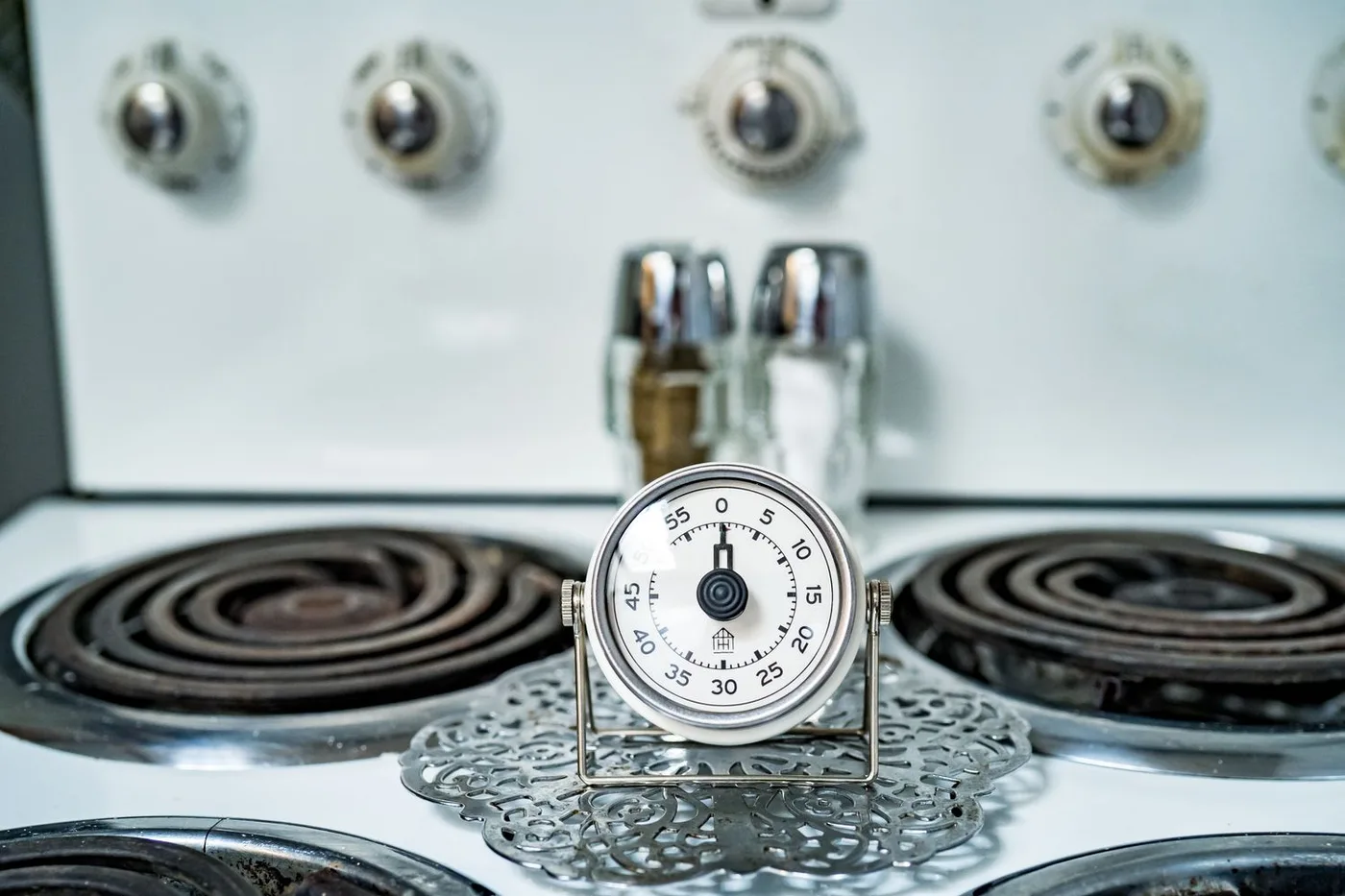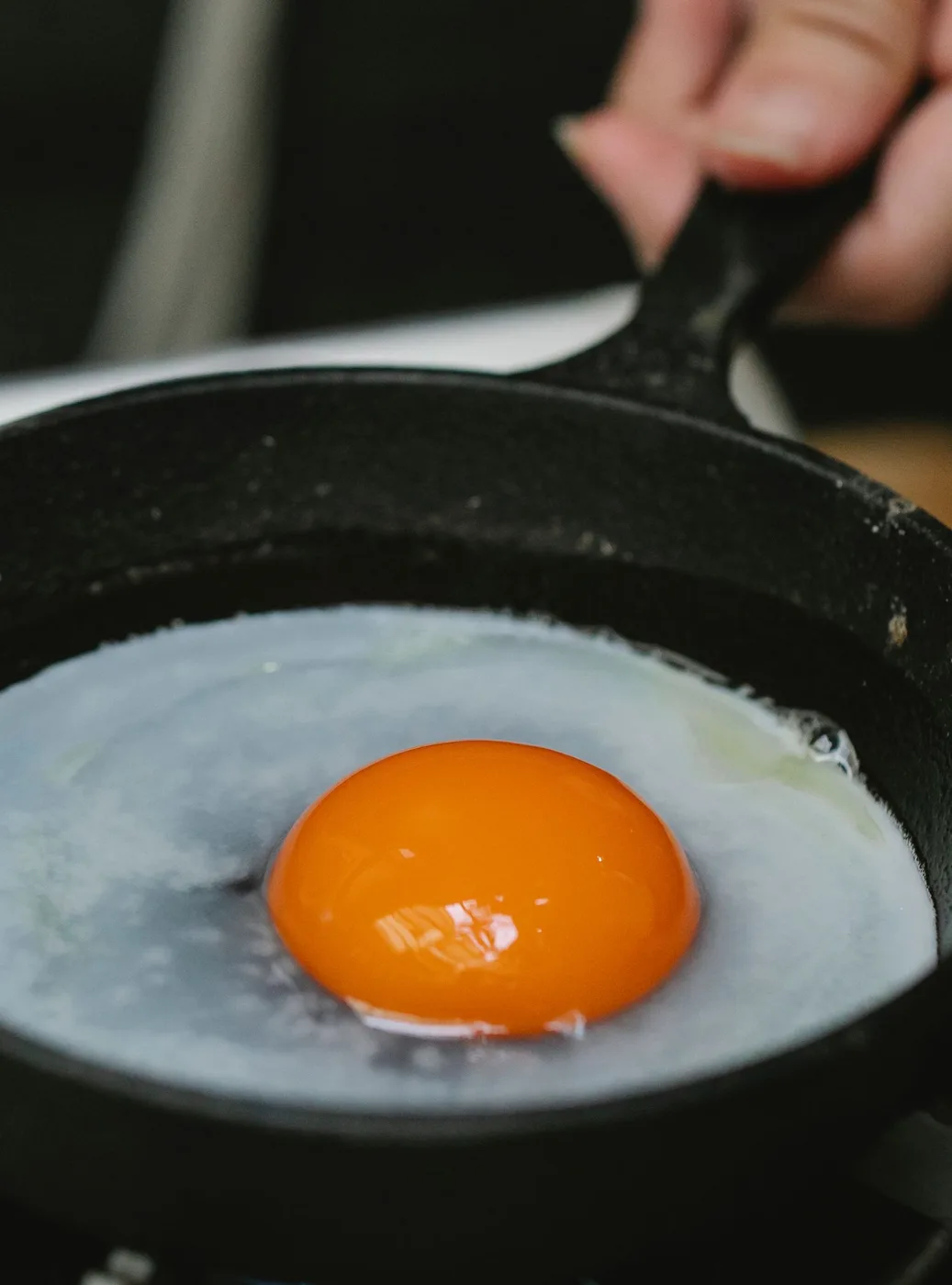
At 6:30 p.m., three chicken pieces in a skillet may finish at different times. On Sunday, one large roast may stay in the oven while you prepare vegetables. Both meals benefit from a food thermometer, but the useful information differs: several quick internal checks versus the temperature changing at one monitored location.
Compare the measurements your regular meals need. Specifications below come from manufacturer documents checked on October 19, 2026; we have not independently tested these instruments. Follow USDA's food-specific temperature and rest-time guidance, rather than relying on a preset doneness label.
Choose an instant-read for checking several pieces and finding colder spots. Add a suitable leave-in probe for monitoring a larger item over time; its alarm cannot check every part of the meal.
Define the job before comparing speed or apps
An instant-read is held in place while you check a spot, then removed. It is useful for separate portions, foods cooked in batches, and moving through a larger item to locate colder areas. Its cost is your attention: you need to take the readings at the right time, position the sensor, and clean it between uses. A faster instrument does not decide which piece needs checking.
A compatible leave-in probe stays in the food while a separate display reports temperature and, when equipped, sounds an alarm. That suits a roast you want to monitor while doing other preparation nearby. The compromise is that the sensor reports one location. If it slips, touches an unsuitable area, or was poorly positioned, the display still looks convincingly precise.
Prioritize the more frequent task. For dinners involving thin fillets, cutlets, or separate portions, start with an appropriate instant-read. If you already own a usable spot-check thermometer and regularly roast large foods, a leave-in system adds a different function. Buy both when both jobs recur.
Swipe left or right to compare all columns ↔
| Comparison dimension | Instant-read | Wired leave-in probe |
|---|---|---|
| Question answered | What is the temperature at the spot I am checking now? | How is the temperature at this inserted probe changing? |
| Strong household scenario | Several portions, thin foods, and checks at multiple locations | A larger food monitored during an oven cook |
| Attention required | You perform and interpret each check | You position the probe, set the alarm, and still verify other locations |
| Probe selection | Sensing area must fit inside the food | Insertion depth and food thickness must suit the installed probe |
| Heat limitation | Measurement range does not make the body oven-safe | Probe, cable, handle, and display can have different limits |
| Likely drawback | No continuous alarm while put away | Cable routing, extra cleanup, and replacement-probe costs |
| Reason to skip | You need continuous monitoring as well as spot checks | Your usual portions cannot hold the sensing area securely |
Check whether the sensing area fits your food
Measure the approximate thickness of a typical portion before shopping. A long metal stem is not necessarily a long sensing area: the instructions must identify where measurement occurs and how far the probe must be inserted. Eliminate a model when its required placement cannot fit fully inside the food without reaching a pan, bone, or the opposite surface.
USDA recommends reaching the center of thin foods from the side and checking temperatures in appropriate thick portions, avoiding bone, fat, and gristle. Apply that placement guidance alongside the particular thermometer's sensing-area instructions. A generic insertion depth printed for one thermometer type should not replace the manual for a different probe design.
For example, Thermapen ONE's instructions identify a tip sensor and a minimum immersion of 1/8 inch. That is a sensor specification, not a recommendation to sample only the outside 1/8 inch of a thick roast. Its tip still needs to reach the internal location you intend to measure. A slim tip helps positioning, but correct positioning remains the cook's responsibility.
Compare accuracy over the range you will actually use
Three numbers need separating: measurement range, accuracy, and display resolution. Range describes the temperatures the instrument can report. Accuracy specifies a tolerance, often changing across that range. Resolution describes the increments on the screen. A display showing tenths does not establish accuracy to a tenth of a degree.
Decide whether your main work is checking ordinary internal food temperatures, measuring hotter cooking liquids, or another documented use. Read the relevant accuracy band rather than carrying the most favorable headline tolerance into every application. If a seller provides only a broad range and many screen digits, ask for the accuracy specification before paying for apparent precision.
Response time needs its conditions. ThermoWorks specifies 2–3 seconds for ThermoPop 2's 4.5-inch version, versus 3–4 seconds for the 8-inch version. In a meal, positioning and waiting for a stable reading still take time. Faster sensing helps repeated checks but cannot compensate for missing the center.
Use named models to compare functions, not a universal winner
The three ThermoWorks models below create a useful comparison within one manufacturer's published specifications. They are not a survey of every brand. ThermoPop 2 and Thermapen ONE answer the spot-check question with different stated speeds and accuracy bands. DOT adds an alarm and a replaceable wired probe for continuous monitoring.
Choose the function first, then compare current price, warranty, parts, and handling. For occasional checks, faster response may solve little. For several portions, faster sensing and folding storage may justify a different shortlist. Judge DOT as a monitor rather than a substitute for a handheld check.
Swipe left or right to compare all columns ↔
| Model | Published measurement details | Practical fit | Main tradeoff |
|---|---|---|---|
| ThermoPop 2, 4.5-inch probe | 2–3-second response; ±1°F from 14 to 208°F; IP67 body | Occasional or routine spot checks with a simple handheld tool | Fixed probe requires its sheath and storage space; no leave-in monitoring |
| Thermapen ONE | 1-second response; ±0.5°F from −4 to 248°F; folding probe; IP67 body | Frequent checks across several portions or locations | Still a handheld check; paying for speed does not add an oven alarm |
| DOT Simple Alarm Thermometer | ±1.8°F from −4 to 248°F; −58 to 572°F measurement range; wired probe and temperature alarm | Following one larger food while preparing the rest of dinner | One monitored location; cable management and probe replacement are additional responsibilities |
Read oven limits as separate limits for separate parts
USDA says not to leave a thermometer in cooking food unless its manufacturer specifically designed it for that use. A handheld model's high measurement range describes what its probe can measure, not what the plastic body can survive. Both ThermoPop 2 and Thermapen ONE instructions prohibit leaving the instrument in an oven.
DOT illustrates why one headline temperature is insufficient. Its instructions rate the probe tip to 572°F; the cable withstands 700°F and the transition handle 644°F for short periods. Its display stays outside the oven. Those are different limits, and none authorizes contact with a glowing element, direct flame, or coals. Compare the complete assembly against the intended cooking method before buying.
Plan the cable route before the first cook: keep it away from elements, avoid kinks, and follow the manual's precautions where it passes through an oven door. If your setup cannot provide an appropriate route, remove that system from the shortlist. A temperature rating does not make a cable immune to crushing or repeated bending.
Choose alarms and maintenance that match the household
A local alarm may be sufficient in the kitchen. For notification elsewhere, compare that separate requirement: a basic alarm does not imply phone connectivity or remote range. Try the alarm during setup, including with the range hood running. Keep supervising cooking appliances while using a monitor.
Treat a wired probe as a replaceable working part. DOT's instructions identify compatible Pro-Series replacements and warn against pulling by the cable or fully immersing it. Check the price and availability of the exact compatible replacement before comparing ownership costs. A less expensive base can be poor value for someone who repeatedly damages cables during storage.
For handheld instruments, look at the cleaning instructions around the hinge, buttons, and battery cover. An ingress-protection rating is not blanket dishwasher permission: Thermapen ONE's manual specifically excludes dishwasher cleaning. A household that will not maintain a folding hinge may prefer a simpler shape, while one that needs compact storage may appreciate the folding design. Neither preference changes the need to clean the probe between measurements.
Check the shortlist before buying, and the instrument after delivery
A useful purchase checklist has five items: the sensing area fits your usual food; the stated accuracy covers your working temperatures; the body and every installed part suit the intended heat exposure; the display and alarm are usable in your kitchen; and cleaning, storage, batteries, and replacement parts are manageable. Reject failures instead of averaging them away with extra features.
After delivery, read the placement and cleaning instructions, inspect the probe and cable, and check operation before depending on the instrument during dinner. ThermoWorks provides guidance for a correctly prepared ice-bath accuracy check. Follow that procedure and the exact model's tolerance; a glass with a few floating cubes is not an equivalent reference. Do not apply a homemade correction based on one casual comparison. Contact support if the reading falls outside the specified tolerance.
An ice check does not validate the full measurement range. Keep the manufacturer's instructions for later checks, especially after a drop or implausible reading. Choose an instrument you can position, interpret, and maintain for the meals you cook.
Shopping notes
Use these options as a starting point, then check dimensions, current materials, care instructions, availability, and the retailer’s return policy before ordering.
ThermoWorks ThermoPop 2, 4.5-inch probe
Consider it for: A straightforward handheld instrument for spot-checking individual portions and several locations.
The tradeoff: Its fixed probe needs protected storage, and the instrument cannot remain in the oven.
Explore at the official site External merchant link · no affiliate commissionThermoWorks Thermapen ONE
Consider it for: Frequent spot checks where the published one-second response and folding probe address a recurring task.
The tradeoff: It adds neither continuous monitoring nor a leave-in oven alarm; speed still depends on correct placement.
Explore at the official site External merchant link · no affiliate commissionThermoWorks DOT Simple Alarm Thermometer
Consider it for: Monitoring an appropriately sized roast with a wired probe and a local temperature alarm.
The tradeoff: It monitors one location, requires suitable cable routing, and uses compatible replacement probes.
Explore at the official site External merchant link · no affiliate commissionYour questions, answered
Can a leave-in probe replace every instant-read check?
It reports the location where its sensor sits. You still need to verify appropriate other locations or separate portions. A monitor and a handheld instrument can complement each other when both tasks occur regularly.
Does a 572°F measurement range mean the thermometer can stay in the oven?
No. Check the manual for each part's permitted use and heat exposure. A handheld probe may measure a high temperature while its body must stay away from the oven and hot surfaces.
Should I pay more for the fastest thermometer?
Prioritize placement, documented accuracy, and suitable use first. Faster response can help with repeated checks across a meal, but an occasional cook may gain more from clear operation and manageable cleaning than from saving a second or two.
Sources & further reading
Product and care details were checked against the dated sources below. Our practical recommendations are editorial judgments, and a listed source does not imply endorsement.
- USDA FSIS: Food ThermometersChecked 2026-10-19
- ThermoWorks: ThermoPop 2 specificationsChecked 2026-10-19
- ThermoWorks: Thermapen ONE specificationsChecked 2026-10-19
- ThermoWorks: DOT specificationsChecked 2026-10-19
- ThermoWorks: DOT operating instructionsChecked 2026-10-19
- ThermoWorks: Thermapen ONE operating instructionsChecked 2026-10-19
- ThermoWorks: ThermoPop 2 4.5-inch operating instructionsChecked 2026-10-19
- ThermoWorks: How to test a digital thermometer for accuracyChecked 2026-10-19