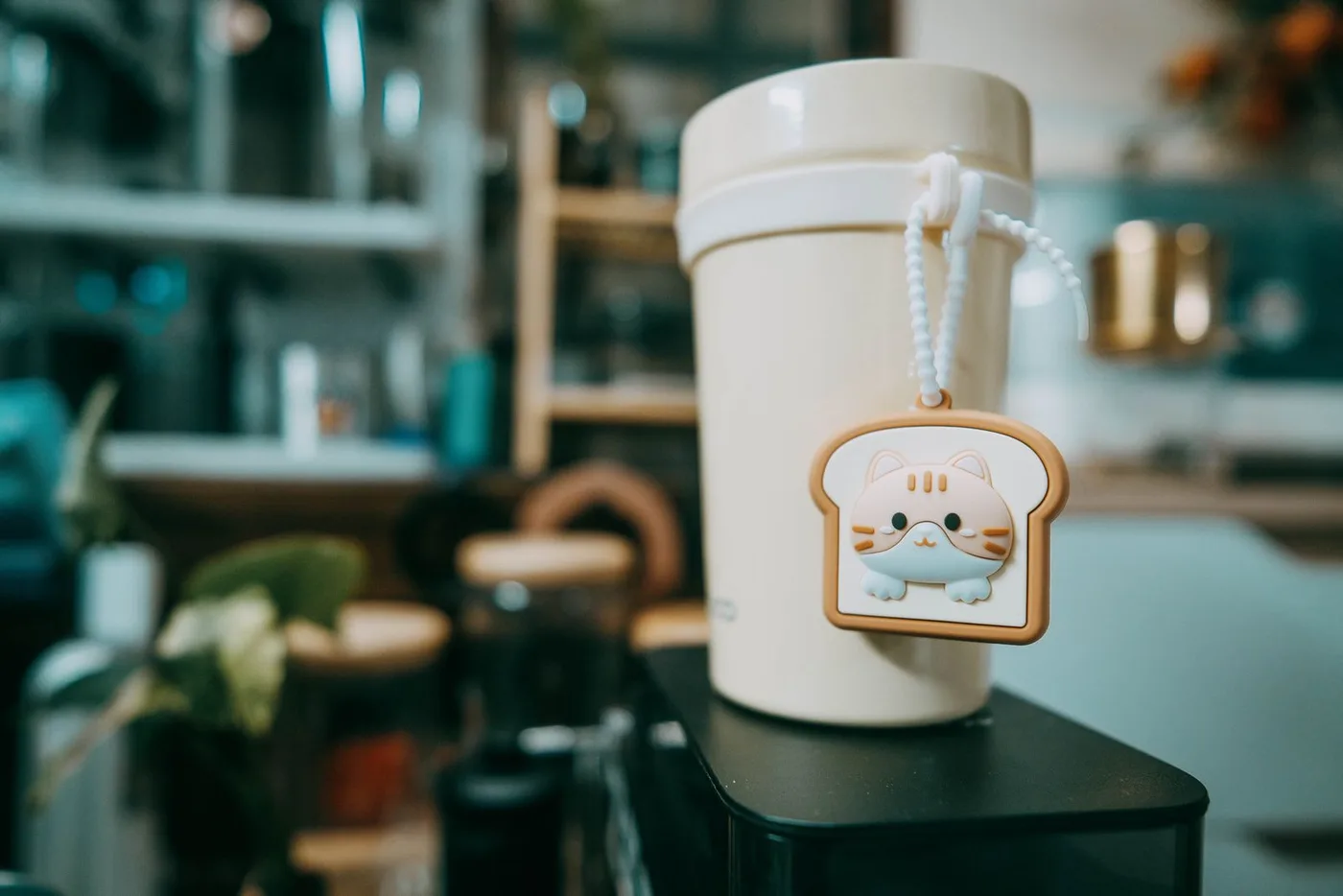
A travel mug has several different jobs: take coffee out of the kitchen, survive the journey, and make drinking convenient at the destination. A tumbler that works perfectly beside a laptop may be unsuitable inside the same laptop's bag. A mug that holds a whole morning's coffee may fit neither the brewer nor the shallow cupholder in a compact car.
Start with those constraints before choosing colors or comparing insulation slogans. This guide uses manufacturer information checked November 6, 2026, alongside practical decision rules. Domavello has not performed leak, heat-retention, or durability tests on these mugs; the product examples are researched shortlists rather than tested rankings.
Choose a closed, explicitly leakproof design for bag transport, measure the entire route from brewer to cupholder, and reject any lid you will not clean properly. A larger handled mug is useful only if its filled weight and footprint work for you.
First decide whether the mug must travel inside a bag
Write down the worst normal position: upright in a desk holder, tilted while carried, or horizontal in a crowded bag. For bag transport, require an explicit leakproof claim for the exact body-and-lid combination, a positive closure you can recognize, and instructions explaining correct assembly. A lid that merely reduces splashing does not pass this requirement.
Check how the opening closes after each sip. A push-to-drink mechanism can remove the separate step of sliding a cover back, while a manual slider makes its position visible. Neither is automatically better for everyone. If a button is uncomfortable to hold, or you cannot tell whether a slider is fully shut, that interface fails your routine even if the product description sounds convenient.
Use the return window to check assembly and closure with cool water over a sink, following the instructions. This is a basic owner check, not proof against every future leak. Keep a new mug away from valuables until you understand it. Replace damaged or missing seals instead of assuming tightening harder will repair the problem.
Measure a serving, then measure the spaces it must pass through
Measure your actual drink in a kitchen measuring jug, including milk, and leave the headspace required by the mug's instructions. A nominal 16-ounce vessel should not be assumed to accommodate a full 16-ounce drink plus additions. If you routinely finish a smaller serving before leaving the station, buying extra capacity may only increase the load you carry.
Measure the narrowest diameter and usable depth of your cupholder, the clearance under your brewer, and the height of the shelf where the mug dries. Include handles, lids, and the space needed to grasp the mug. A cupholder-compatible claim describes a general design intention, not a guarantee about your particular car. A wide handle can hit an adjacent console even when the base fits.
Filled weight matters on a long walk or when grip strength is limited. For a rough household estimate, 500 mL of water adds about 500 g before the mug itself. Try that load in an ordinary vessel while stationary. Choose a smaller serving or a more manageable grip if carrying it feels tiring; an impressive insulation claim does not lighten the load.
Swipe left or right to compare all columns ↔
| Buying criterion | What to check | Reject or reconsider when |
|---|---|---|
| Bag transport | Exact lid is explicitly described as leakproof when closed | Only splash resistance is claimed |
| Capacity | Your measured serving fits below the required fill level | You must overfill or routinely discard the surplus |
| Physical fit | Base, handle, overall height, brewer clearance | The handle hits the console or mug cannot fit below the brewer |
| Daily cleaning | Access to every drinking channel and seal | You cannot follow the disassembly and washing procedure |
| Ownership cost | Delivered price plus compatible lid or seal replacements | The failure-prone part has no identifiable replacement |
Compare two current designs by the job they solve
Contigo's West Loop 3.0 16 oz uses a push-button AUTOSEAL closure. Its published dimensions are 3 inches wide by 8.2 inches high. The maker specifies a top-rack-dishwasher-safe lid and hand washing for the body. That makes it a useful example for someone considering one-handed drinking, with the clear compromise that the entire mug cannot simply follow the lid into the dishwasher.
YETI's current Rambler 20 oz Travel Mug with Leakproof Stronghold Lid adds a handle and more capacity. YETI lists dishwasher-safe components and a 1.17 lb empty weight. Our practical interpretation is that it deserves consideration when the handle and washing method solve daily problems, but the extra vessel and liquid weight is a reason to pass for a long walking commute.
Model generations matter. YETI's current page describes a redesigned leakproof lid; do not transfer that claim to an older lid or a press-fit MagSlider configuration. Check the precise listing before comparing. Both examples make sealing claims that depend on proper closure, and neither recommendation establishes independent real-world leak performance.
Swipe left or right to compare all columns ↔
| Model | Useful scenario | Published distinguishing feature | Main compromise |
|---|---|---|---|
| Contigo West Loop 3.0, 16 oz | A modest drink and a preference for push-to-drink operation | AUTOSEAL; lid top-rack dishwasher safe; body hand-wash only | You must accept hand washing the body and the button interface |
| Current YETI Rambler Travel Mug, 20 oz, Leakproof Stronghold Lid | A larger drink and a preference for a handle and dishwasher washing | Handled body; dishwasher-safe components; 1.17 lb empty | More weight before filling; handle clearance still requires measurement |
Treat heat retention as a schedule question
Ask when you take the first sip and when you finish. Someone who drinks during a short walk may prefer coffee to reach a comfortable temperature quickly; someone taking a break hours later has a different goal. More persistent heat is not automatically a benefit for the first person. Prepare the beverage to suit your schedule and follow the vessel's instructions.
Do not rank mugs using bare hot-for-hours claims unless the starting temperature, fill volume, room conditions, and final-temperature threshold are comparable. Those conditions change the meaning of the number. We have not generated a temperature curve for either example, so no comparative insulation winner is declared here.
Keep carrying and drinking decisions separate. Open hot-drink containers slowly and upright, following their instructions, and check temperature before drinking. Never assume the outside temperature tells you how hot the contents remain. If your everyday habit is sipping at a desk shortly after brewing, an existing ceramic cup may solve that part of the day without another insulated purchase.
Price the lid, the cleaning time, and the replacement path
Before buying, find the care instructions and identify the full path liquid travels through. Look for parts that lift or open, not just a photograph of a smooth exterior. If you add milk, prioritize access for prompt washing over a decorative finish. Rinsing the main chamber does not clean a hidden drinking channel.
Check the exact replacement lid or gasket part number and its delivered cost. Two mugs with the same ounce capacity need not share parts, and a familiar brand name does not establish compatibility. A spare seal can extend useful ownership only when it is intended for that model and installed correctly. Do not substitute an improvised gasket to save a small amount.
Compare total delivered prices only after eliminating unsuitable designs. Include the cleaning brush you actually need and any replacement you realistically expect to buy. Skip a new mug if your current one already seals correctly, fits your serving, and remains easy to clean. Buy the Contigo-style workflow for its button convenience or the handled YETI workflow for its grip and washing convenience; buy neither simply because a seasonal color is discounted.
Shopping notes
Use these options as a starting point, then check dimensions, current materials, care instructions, availability, and the retailer’s return policy before ordering.
Contigo West Loop 3.0 Stainless Steel Travel Mug, 16 oz
Consider it for: A measured smaller serving with a push-to-drink closure.
The tradeoff: The lid can use the top dishwasher rack, but the body requires hand washing; confirm current stock and color.
Explore at the official site External merchant link · no affiliate commissionYETI Rambler 20 oz Travel Mug with Leakproof Stronghold Lid
Consider it for: A larger serving when a handle and dishwasher-safe components are priorities.
The tradeoff: The listed 1.17 lb empty weight and handle make filled weight and clearance important; verify the current lid generation.
Explore at the official site External merchant link · no affiliate commissionYour questions, answered
Is splash-resistant the same as leakproof?
No. Choose an explicit closed-lid leakproof claim for a mug intended to travel inside a bag, and follow the exact assembly and closure instructions. A splash-reducing lid may be intended to remain upright.
Can I assume a 20-ounce mug holds my 20-ounce drink plus milk?
No. Measure the finished drink and respect the manufacturer's fill limit and headspace instructions. Nominal capacity does not authorize filling to the brim.
Should I buy the mug with the longest hot-for-hours claim?
Only if that matches your actual schedule. Published claims need comparable test conditions to support a ranking, and very hot coffee can be inconvenient when you want to drink immediately.
Sources & further reading
Product and care details were checked against the dated sources below. Our practical recommendations are editorial judgments, and a listed source does not imply endorsement.
- Contigo: West Loop 3.0 16 oz specifications and careChecked 2026-11-06
- YETI: current Rambler 20 oz Travel Mug and Leakproof Stronghold LidChecked 2026-11-06