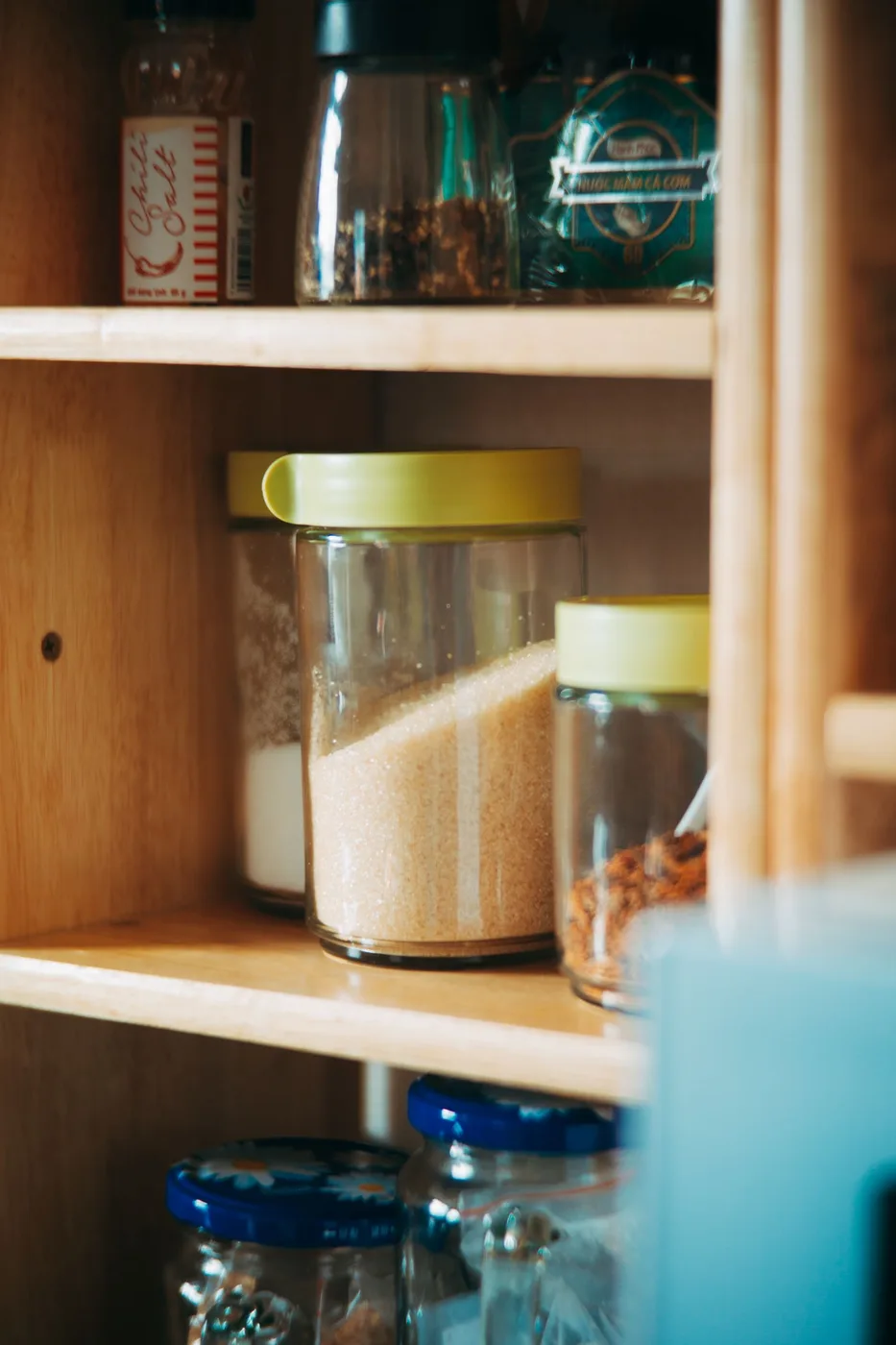
A bag of flour leans beside an open box of oats, while a small packet of specialty grain has been used once. Matching containers can make that shelf easier to use, but transferring every ingredient also creates washing, labeling, and refill work. Not all of those foods need the same treatment.
This guide is for a working pantry where breakfast happens quickly and grocery refills rarely arrive at the perfect moment. Start with the ingredients that spill, become awkward to close, or hide behind other packages.
Choose containers for a few frequently opened staples first. A good fit holds a whole usual package, leaves room to scoop, and preserves product information and dates.
Audit one shelf before buying a set
Empty the shelf and group ingredients by how often you open them. Put flour, oats, rice, and other frequent staples in one group; occasional baking ingredients and sealed backups in another. Check the package directions and condition before returning anything to storage.
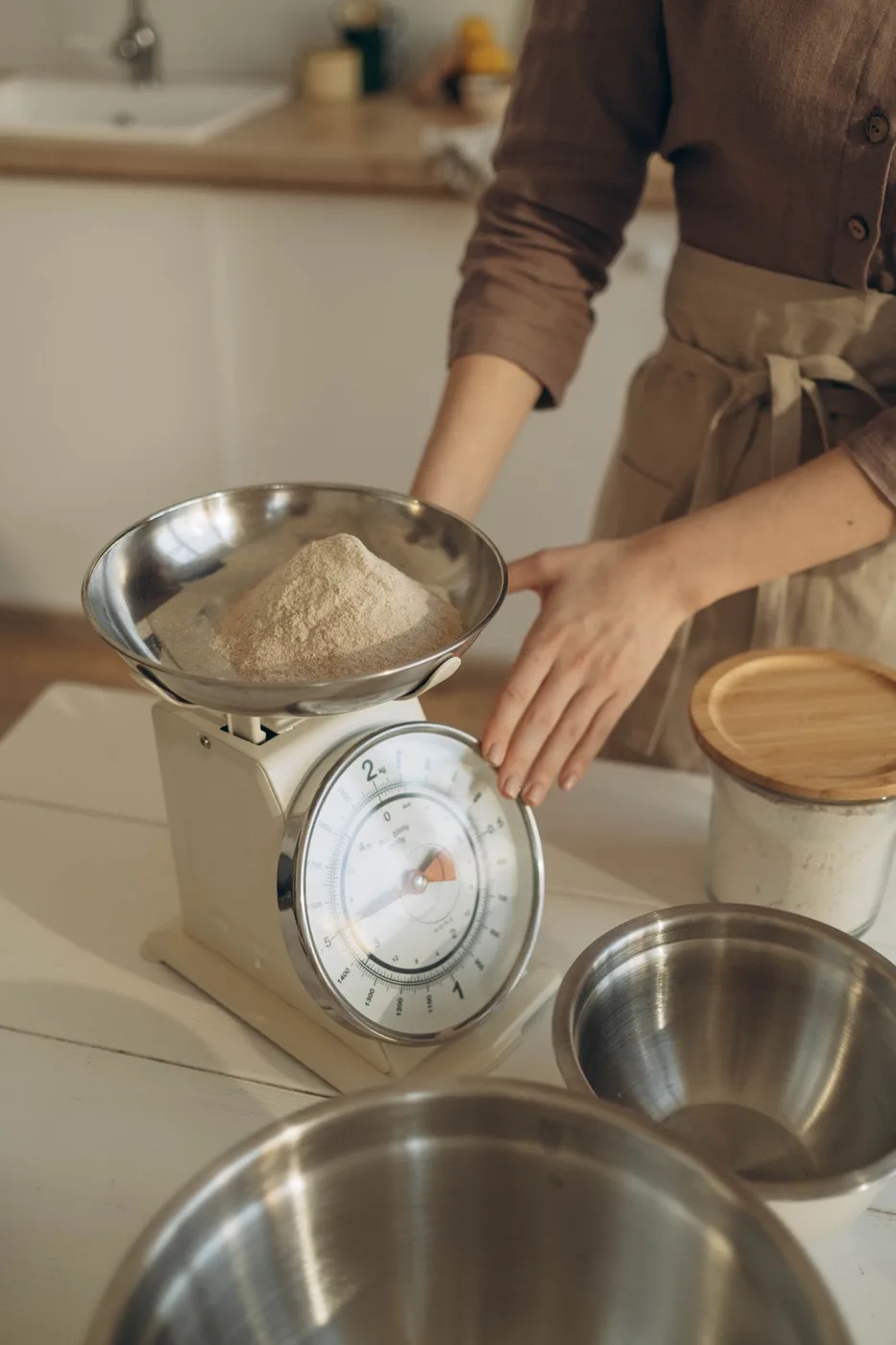
Write down your normal package size for each candidate. Weight does not translate directly into container volume across different foods. A pound of one ingredient may occupy much more space than a pound of another. Use the maker's capacity guidance where provided, or measure the volume of a typical package with a suitable measuring vessel.
Plan for the entire refill
A container that almost holds the bag leaves you managing both the container and a partly empty package. Allow useful headroom so you can insert a scoop without spilling. Measure the mouth opening as well as total capacity; a tall narrow jar can be frustrating for flour even if the nominal volume is adequate.
Decide what happens when fresh groceries arrive before the old supply runs out. Keep the new package separate until the container is ready to be emptied and cleaned. Topping up continuously makes it harder to track the oldest contents and can trap stale remnants at the bottom.
| Food routine | Container priority | When to keep packaging |
|---|---|---|
| Daily oats | Easy opening and full-bag capacity | Small single-serve packets |
| Frequent baking | Wide scoop access | Rare ingredients with detailed directions |
| Rice or grains | Controlled pouring and visible label | Specialty grain used occasionally |
| Sealed backups | Shelf bin or clear category | Usually leave unopened |
Keep the information that matters
Transfer the ingredient name, relevant date, and storage instructions to the new container. Keep a photograph or clipped portion of the original label with allergen, cooking, lot, and recall-identification information. Do not assume everyone in the household can identify a flour or grain by appearance.
A removable label on the container's front is useful on a shelf; a top label is more helpful in a deep drawer. Include the opening or transfer date if it supports your routine, while retaining any manufacturer date. A handwritten label that stays current is more useful than an elegant label that survives the wrong refill.
Fit the shelf before the aesthetic
Measure usable shelf height with the door closed. Include the room required to lift the lid or remove the container, not just its static height. Deep shelves can benefit from a shallow row of frequently used food at the front and unopened backups behind, but avoid hiding ingredients you regularly forget.
Stackable containers require unstacking whenever you need the lower item. Stack backups above a daily staple only if moving them is easy. Rectangular shapes can use shelf width efficiently, yet a rounded body may be easier to grasp. Test the grip with the expected filled weight.
Compare closures and cleaning effort
OXO's POP collection offers multiple shapes and capacities. That makes it possible to choose individual pieces rather than accepting a set's assortment. Inspect the care directions for the exact version and lid, especially if you are combining older pieces with new ones.
Airtight pantry storage is not a promise that food lasts indefinitely or becomes suitable for transport with liquid. USDA's shelf-stable food guidance emphasizes appropriate storage conditions and the food's condition. Follow package directions for ingredients that require refrigeration after opening, even when the pantry container closes beautifully.
Buy a small system you can maintain
Begin with two or three problem foods, then use those containers through a complete refill cycle. Notice whether labels survive washing, scoops reach comfortably, and the empty vessel can dry completely. You may discover that a basket for packets solves more problems than another set of sealed canisters.
Avoid paying for tiny containers that merely replace small, resealable original packages. Spend on useful capacity, accessible closures, and replacement availability. A pantry can look coherent with a mixture of original packages and a few well-chosen containers when categories and sightlines are clear.
Shopping notes
Use these options as a starting point, then check dimensions, current materials, care instructions, availability, and the retailer’s return policy before ordering.
OXO POP Containers
Consider it for: Frequently used dry staples that benefit from individual capacity and shape choices.
The tradeoff: Choose around a full usual refill and the lid's care requirements; a large assortment may include sizes you rarely need.
Explore at the official site External merchant link · no affiliate commissionYour questions, answered
Should I transfer unopened backup bags?
Usually there is little workflow benefit. Keep suitable unopened packaging together and reserve the everyday container for the supply currently in use. Follow each package's storage directions.
Can I add new flour on top of the old flour?
A full empty-and-clean cycle makes age tracking easier. Keep the new package separate until the older contents are used, then wash and completely dry the container as instructed before refilling.
What is more useful: matching shapes or matching lids?
For many households, a simple closure system and easy identification matter most. Choose shapes around shelf dimensions and scoop access, then reduce the number of incompatible lids where practical.
Sources & further reading
Product and care details were checked against the sources below on October 18, 2026. Our practical recommendations are editorial judgments, and a listed source does not imply endorsement.
- USDA: Shelf-Stable Food SafetyChecked 2026-10-18
- OXO: POP ContainersChecked 2026-10-18