In a busy kitchen, the trash can is used with full hands, wet hands, and occasionally an impatient elbow. It also needs to fit a location where the lid can open without hitting a drawer. A few minutes spent checking those movements can be more valuable than comparing exterior finishes.
Imagine a weeknight cleanup: vegetable scraps, food packaging, and a large empty carton all arrive within minutes. The right setup makes it clear where each item goes and allows a bag change without dragging the entire can across the floor.
Pick a can that you can open, empty, and clean comfortably in its actual location. A useful waste station reflects your local collection rules and the amount your household produces.
Measure movement as well as footprint
Tape the proposed base outline on the floor and stand where you would use it. Open nearby doors and pull out the dishwasher rack. Allow for the pedal, a person standing in front, and the lid at its highest point. A slim body can still have a lid that collides with a counter overhang.
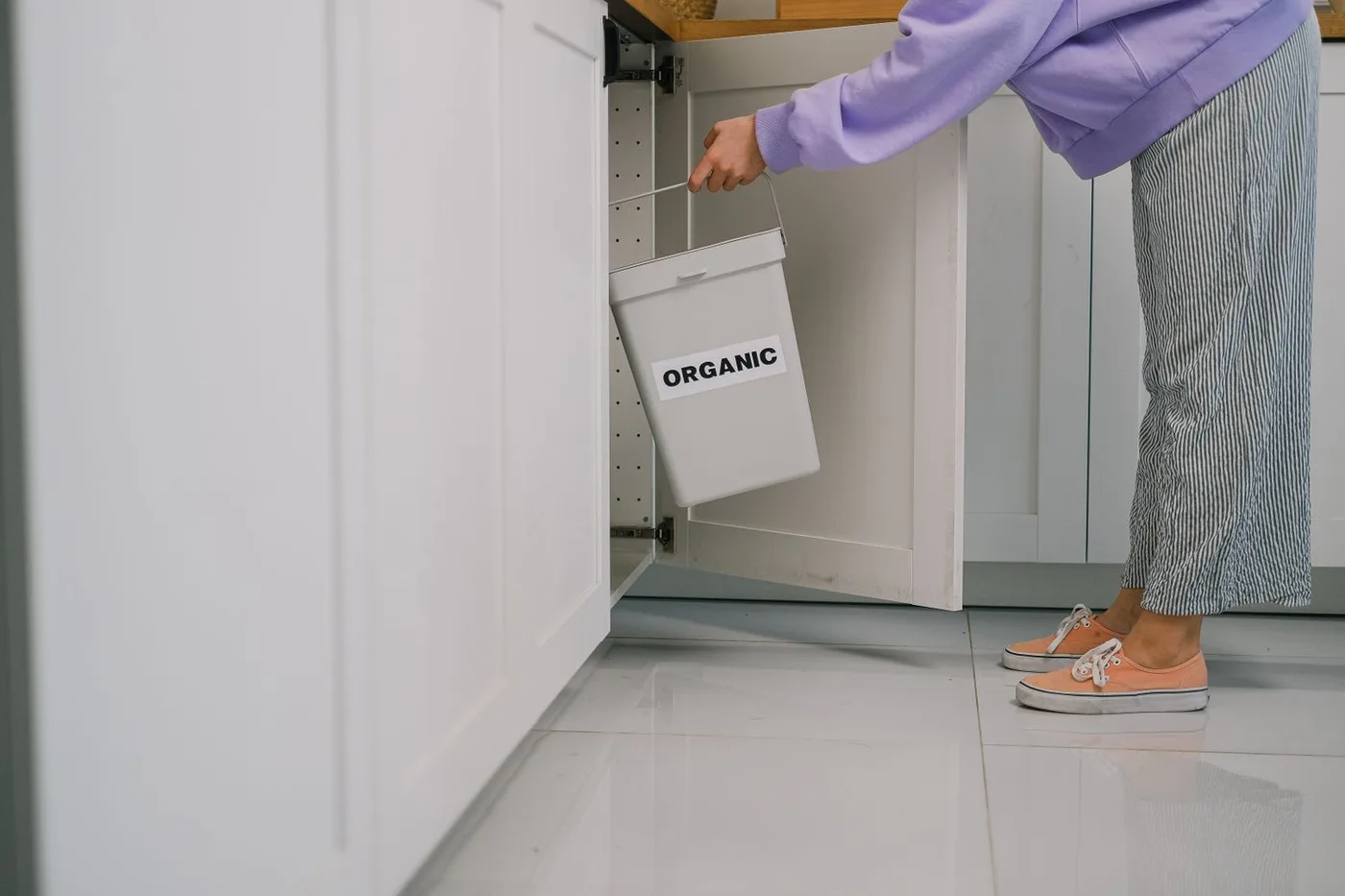
Think about how a full bag leaves the can. If the only extraction route passes under a low shelf, a tall can may be frustrating even when the closed lid fits. For a pullout cabinet system, verify the door opening and mounting requirements rather than relying on external cabinet width.
Size it around removal frequency
Observe how much trash remains after recycling and any locally accepted food-scrap collection. Note how often you want to carry it outside. A household cooking fresh meals may create small amounts of wet waste that benefit from frequent removal, while another may accumulate bulky packaging.
More capacity can mean a heavier bag and a longer interval before removal. Choose a size you can lift comfortably, especially if the outdoor bin is down stairs. Do not buy a very large can simply to use a familiar bag size; compare the bag fit and likely weight together.
| Situation | Useful direction | Check before buying |
|---|---|---|
| Tight walkway | Slim or cabinet-mounted can | Door and pedestrian clearance |
| Hands full while cooking | Foot-operated lid | Pedal reach and stability |
| Large recycling stream | Separate or divided bins | Useful volume in each section |
| Frequent small bag removal | Manageable smaller can | Bag availability and lift height |
Compare lids by the work they create
A step lid avoids touching the top for routine opening, but it needs floor space for the pedal. An open-top can simplifies disposal yet leaves contents exposed. A sensor lid can help some users, though batteries, sensor placement, and accidental opening become additional considerations.
Avoid treating a particular lid style as an odor guarantee. Contained food waste still needs appropriate handling and regular removal. Check whether the lid stays open during a long cleanup and whether that feature can be used safely in your household. Try the opening motion in a store when possible.
Plan the recycling side first
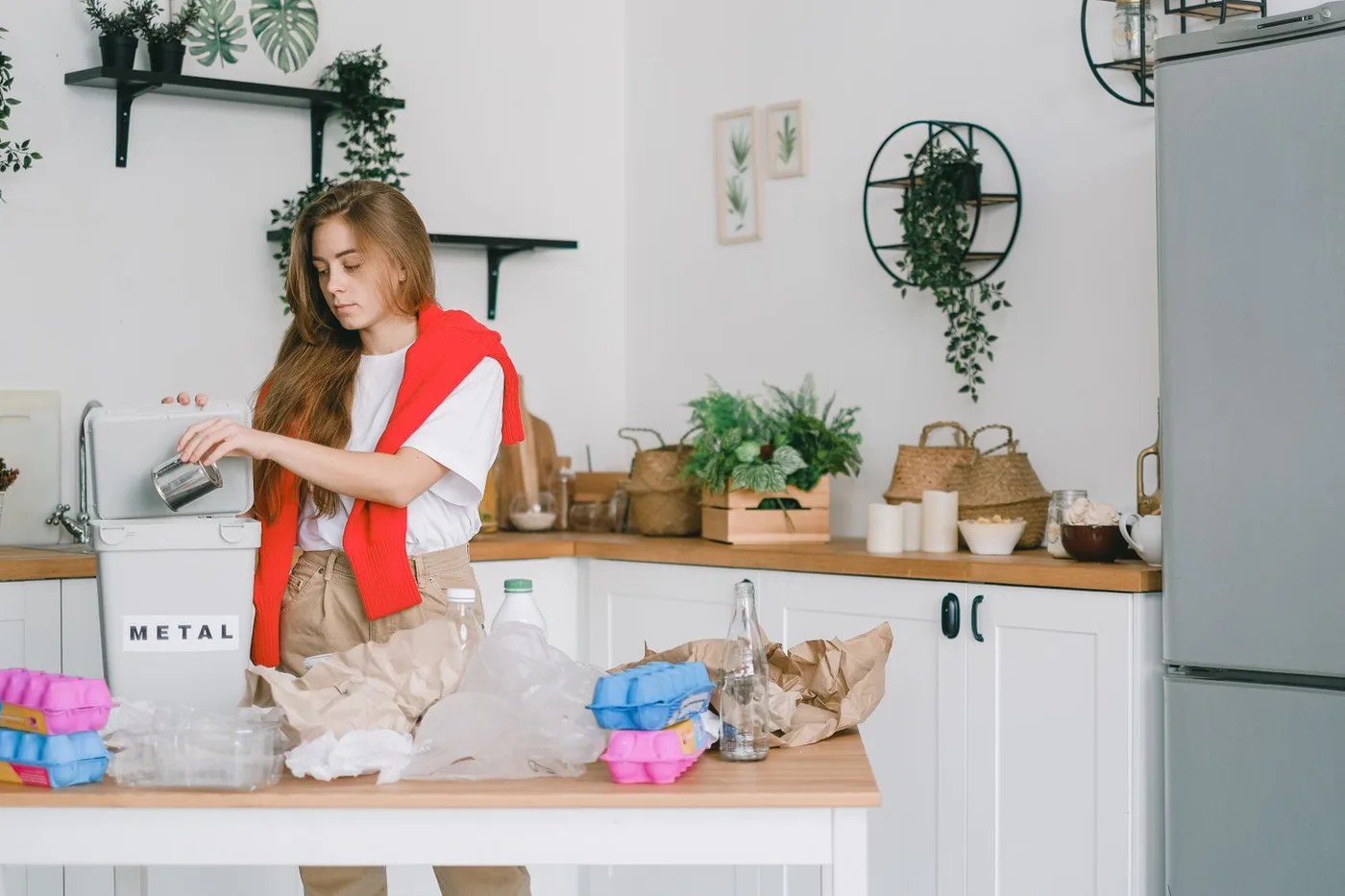
EPA advises checking local program acceptance because materials accepted for recycling vary. Look up your actual hauler's rules before choosing a divided station. A compartment labeled recycling does not make every package recyclable, and a compostable label does not establish acceptance in a local food-scrap program.
Compare the usable capacity of each compartment. Some attractive dual cans devote too little room to the stream your household produces most. Two modest separate bins can be easier to empty independently and reposition. They may look less unified, but they allow the layout to follow your local collection routine.
Check bags, liners, and cleaning access
Read the recommended bag dimensions and ask whether widely available alternatives fit securely. A specially shaped liner can be convenient, but a continued supply becomes part of the ownership cost. Do not assume an advertised capacity guarantees a good fit for every bag with a similar capacity label.
Look for access to the bottom, seams, and lid underside. A removable inner bucket can make washing easier, provided you can lift it. Simplehuman's step-can collection includes several capacities and shapes; its liner-pocket models are examples of an integrated bag-storage feature, not proof that every household needs one.
Make the station easy to use correctly
Place clear labels where someone sees them before discarding an item. Keep any bag roll or cleaning cloth in a suitable nearby location, so a bag change does not become a hunt. Avoid storing spare bags where children or pets can reach them.
Before committing to an expensive finish, consider whether the current problem is simply placement. Moving an existing can closer to the cleanup area or providing a separate recycling bin may solve the issue. Spend on dimensions, access, and a closure that fits your household before paying for extra electronics.
Shopping notes
Use these options as a starting point, then check dimensions, current materials, care instructions, availability, and the retailer’s return policy before ordering.
Simplehuman step-can collection
Consider it for: Comparing pedal-operated cans by shape and separate or divided waste capacity.
The tradeoff: Check total open height, each compartment's volume, and ongoing liner compatibility; finishes do not change those constraints.
Explore at the official site External merchant link · no affiliate commissionYour questions, answered
Does a larger kitchen need a larger trash can?
Floor area is a poor guide to waste volume. Track what your household discards and how often it removes bags. Choose around that routine and a comfortable lifting weight.
Is a dual-compartment can worth the space?
It can be if both sections suit your local collection streams. If recycling fills much faster than trash, independently sized bins may be easier to manage than equal compartments.
Should I choose a sensor lid?
Choose it for a specific access need or preferred opening method. Check battery care, placement, and the opening motion first. A reliable foot pedal can be simpler for many kitchens.
Sources & further reading
Product and care details were checked against the sources below on October 18, 2026. Our practical recommendations are editorial judgments, and a listed source does not imply endorsement.
- EPA: Recycling Basics and BenefitsChecked 2026-10-18
- Simplehuman: Step CansChecked 2026-10-18