Half a loaf, a cut lemon, and a bowl of leftover rice are three different storage problems. A pack of reusable wraps can help with some of them, but expecting one material to replace every bag, lid, and container leads to awkward compromises.
The useful question is where a wrap would enter your existing routine. Start with a task you repeat often, then check the care instructions and food limits. These comparisons describe published guidance and practical fit rather than claims of product testing or measured environmental savings.
Choose wraps for suitable dry or lightly moist foods and short household routines. Keep appropriate lidded containers for liquids, raw foods, and tasks the wrap maker excludes.
Give each storage job the right structure
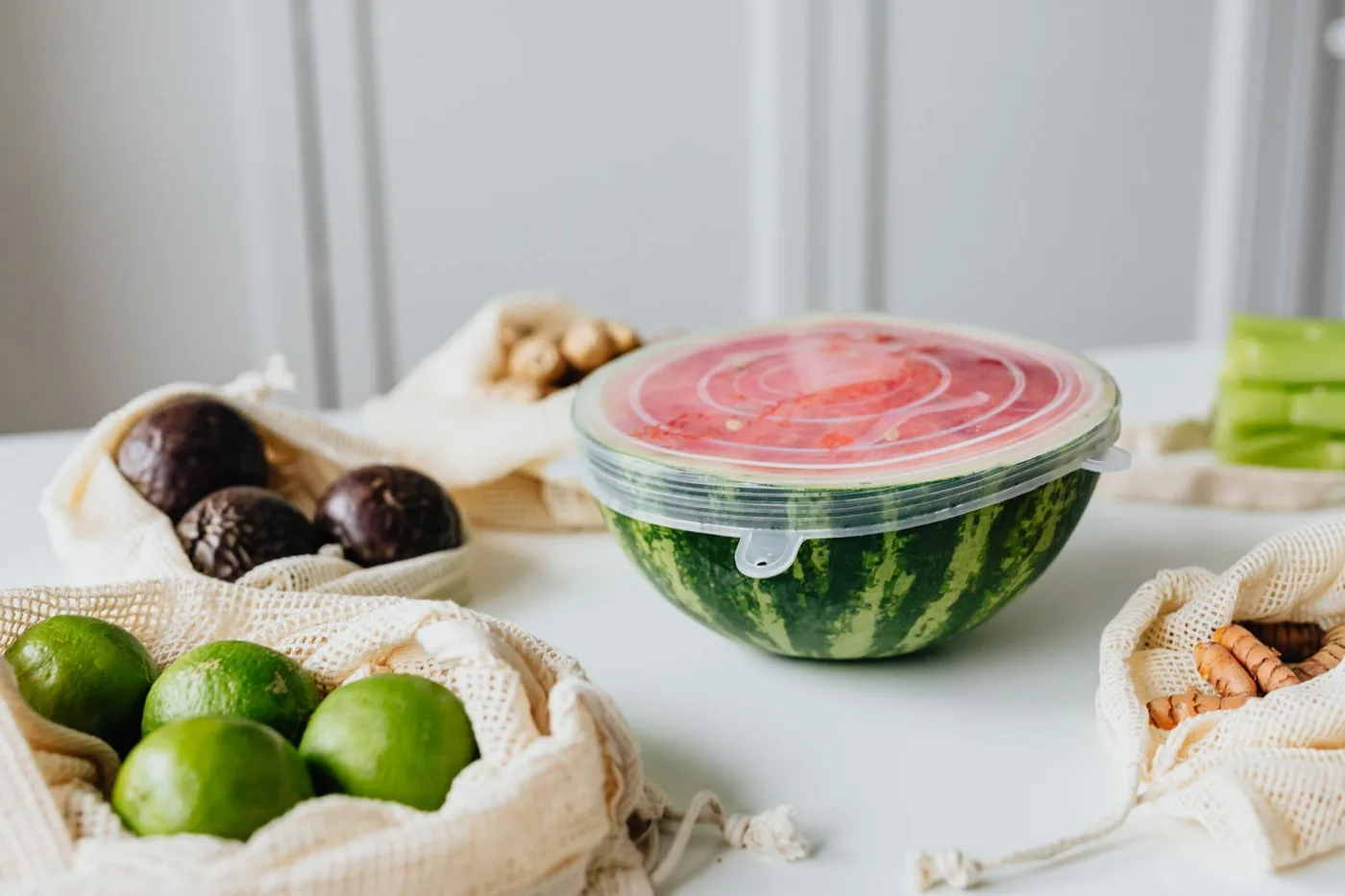
A waxed fabric wrap can fold around bread or cover a suitable bowl, while an elastic or stretch cover depends on the rim and material compatibility. Neither should be presumed to contain a liquid during transport. A rigid lidded container offers structure where the food needs protection from crushing or movement.
Walk through your most common leftovers and identify whether they need wrapping, a cover, or containment. The distinction prevents buying several wrap sizes only to discover that your household mostly stores soup. Keep existing suitable containers in service instead of replacing them merely to create a uniform collection.
| Task | Possible direction | Reason to choose something else |
|---|---|---|
| Wrapping a loaf | Appropriate waxed fabric wrap | Loaf exceeds the available size |
| Covering a compatible bowl | Suitable wrap or reusable cover | Rim will not hold a secure cover |
| Transporting soup | Purpose-designed liquid container | Wraps provide no rigid containment |
| Raw meat storage | Suitable sealed container | Wax-wrap maker excludes the use |
Respect the heat and food restrictions
Bee's Wrap advises against using its wraps with raw meat or fish and says not to wrap food while it is hot. Its care guidance calls for cool-water handwashing with mild dish soap and air-drying, while avoiding heat sources such as dishwashers and microwaves. Check the instructions for the particular wrap you choose.
Do not stretch that guidance into a reason to leave perishable food on the counter while it cools. Use an appropriate container and safe chilling method for the food. The storage accessory must adapt to food safety, rather than food handling being delayed to accommodate a sensitive material.
Measure the food and the fold
For a bowl cover, measure across the widest rim and allow the overlap required by the product. For a sandwich, account for the thickness and the amount needed to fold the edges. A small wrap that barely reaches can be frustrating to handle and may not stay in place as intended.
Start with one or two sizes linked to real foods, such as your usual bread loaf and a frequently used bowl. A large assortment is poor value if its smallest pieces sit unused. Store clean wraps where the sizes are visible, so choosing one does not require unfolding the entire stack.
Plan the washing and drying location
A reusable item becomes practical when washing it fits the end of a meal. If your kitchen relies on putting everything into a hot dishwasher, a handwash-only wrap adds a separate step. Decide whether that step will happen reliably before ordering several packs.
Identify a clean place where a washed wrap can air-dry without touching dirty tools or food. Fold or store it only when appropriately dry according to the maker's directions. Keep it away from the stove, hot pans, and other heat sources. A dedicated spot is helpful because an unfamiliar-looking wet wrap is easy for another household member to put in the wrong place.
Keep the date and label routine
Reusable covers can hide the contents of a bowl, so add a separate readable label where needed. Record the food and preparation date rather than relying on memory. USDA recommends covering leftovers and refrigerating them promptly; changing the cover does not extend the safe storage period.
If you are saving only a small portion, a suitably sized container may be easier to see and date than a covered serving bowl. Use that option when it improves the routine. A reusable wrap is useful because it fits a task, not because it turns every leftover into a better candidate for keeping.
Judge value by repeat use you can maintain
Avoid precise money-saving or environmental claims unless you have a sound basis for the comparison. Materials, washing, frequency of use, and disposal all matter. For household budgeting, start with the simpler question: will this replace a particular disposable item often enough that you will remember to use it?
Inspect the wrap according to the maker's guidance and stop using it when its condition no longer supports the intended task. Before replacing a tired wrap, consider whether the same job would be easier with an existing lid or container. The most useful kit is a modest combination of suitable tools, not a single product assigned every storage problem.
Shopping notes
Use these options as a starting point, then check dimensions, current materials, care instructions, availability, and the retailer’s return policy before ordering.
Bee's Wrap reusable food wraps
Consider it for: Suitable bread, produce, or bowl-covering tasks within the maker's stated restrictions.
The tradeoff: Requires cool handwashing and air-drying; unsuitable for raw meat, raw fish, hot food, and microwave use.
Explore at the official site External merchant link · no affiliate commissionYour questions, answered
Can I use a wax wrap over a hot bowl?
Follow the maker's heat restrictions. Bee's Wrap excludes hot food and heat exposure. Use a suitable container and a safe cooling process instead of waiting with perishable food on the counter for the wrap's sake.
Will reusable wraps make leftovers last longer?
Do not assume an extension. Storage time still depends on the food, temperature, and handling. Keep appropriate dates and follow food-specific guidance regardless of the covering.
Should a wrap replace a lunch container?
Only for a food and transport situation it is designed to handle. A wrap gives little crush protection and should not be treated as a leakproof container for liquid meals.
Sources & further reading
Product and care details were checked against the sources below on October 18, 2026. Our practical recommendations are editorial judgments, and a listed source does not imply endorsement.
- Bee's Wrap: Frequently Asked QuestionsChecked 2026-10-18
- USDA: Leftovers and Food SafetyChecked 2026-10-18
- Bee's Wrap: Reusable food storage collectionChecked 2026-10-18